


The Little-Known "Reality" Behind First Place
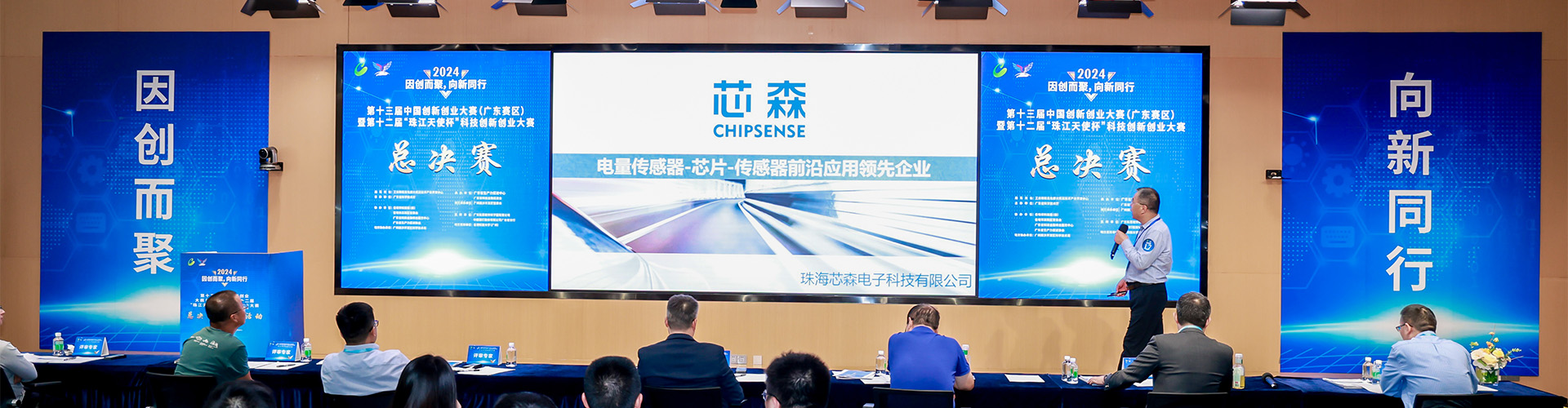
Our country has established the world's largest electric vehicle (EV) charging network. According to data from the National Energy Administration, as of the end of January 2026, the total number of EV charging points (including charging piles and guns) in my country reached 20.698 million—comprising 4.801 million public charging points and 15.897 million private ones—bringing the ratio of vehicles to charging points close to 1:1. Consequently, many charging stations frequently exhibit a phenomenon where there are "many charging points but few vehicles." While this might appear to represent the realization of "charging freedom," it masks a harsh underlying reality: operators earn a profit of less than 0.3 yuan per kilowatt-hour. Furthermore—as revealed by a CCTV investigation—service fees for charging points in certain regions have even fallen below cost price, while fixed costs such as construction and rent remain stubbornly high. This situation has led to a continuous squeeze on profit margins. If left unchecked, this trajectory could easily spiral into a vicious cycle of intense industry involution: operators incur losses -> they lack the funds to upgrade equipment and services -> they cut prices to poach customers. One direct consequence of this vicious cycle is equipment aging and a lack of proper maintenance and operation, which ultimately leads to safety hazards and infringes upon the rights and interests of vehicle owners. Finding the delicate balance between profitability, safety, and regulatory compliance is precisely the critical challenge that the industry must address—and resolve—with the utmost urgency. In this context, current sensors—led by CHIPSENSE—play a crucial role.
The "Invisible Killer" of Safety Risks
Currently, midst the implementation of the national "Three-Year Doubling Plan"—specifically the Action Plan for Doubling Electric Vehicle Charging Infrastructure Service Capacity (2025–2027)—my country's charging infrastructure is undergoing a phase of rapid development. During the long-term operation of these charging facilities, issues such as insulation aging in the main circuits of charging piles and grounding faults can easily lead to residual currents exceeding safety thresholds. These issues primarily stem from three categories of sources:
1. Capacitor Characteristics: When a DC voltage is applied, the dielectric material within a capacitor naturally generates a leakage current;
2. Rectifier Leakage: Faults within the rectification section—where AC is converted to DC—can result in a pulsating DC leakage current;
3. DC Converter Leakage: Malfunctions within the DC voltage conversion stage can result in a smooth, steady DC leakage current.
These residual currents tend to flow continuously and may gradually accumulate, eventually evolving into significant safety hazards. Once such an incident occurs, it can—on the one hand—damage equipment or even trigger a fire; on the other hand, it poses a grave threat to human safety, as the danger DC current presents to the human body is no less severe than that of AC—and may even be more dangerous (for instance, due to the difficulty in breaking free from the circuit).
Statistical data indicates that 70% of electric vehicle (EV) charging pile electric shock incidents stem from inadequate leakage detection and monitoring. In response, the state has issued the Safety Requirements for Conductive Charging Systems for Electric Vehicles (GB 44263-2024), which explicitly mandates that charging piles must obtain "3C" certification and strictly adhere to the requirement that the leakage protection response time be no greater than 0.04 seconds. All CHIPSENSE current sensors comply with national standards.
Currently, the conversion efficiency of mainstream charging modules in the industry stands at only 94%–95%; this means that for every 100 kilowatt-hours (kWh) of electricity, 5–6 kWh are lost during transmission, thereby creating a risk of overheating. According to relevant statistics, in 2025, the incidence of charging pile fires rose by 23% year-on-year, with the majority of these incidents attributed to a lack of temperature monitoring. CHIPSENSE current sensors are also aware of this issue.
Technical Breakthrough: "Millionaire-Level Protection" via Residual Current Sensors
Breaking the aforementioned vicious cycle within the industry requires nothing less than moving beyond destructive price competition and returning to the fundamental essence of technology. With regard to safety:
Limitations of Traditional Solutions
Traditional Type A residual current devices (RCDs) are capable of detecting only sinusoidal AC leakage currents and pulsating DC leakage currents; they are unable to detect smooth DC leakage currents. This limitation stems from the fact that traditional electromagnetic current transformers—which operate based on the principle of electromagnetic induction—can only detect changing currents (i.e., AC). In the presence of smooth DC, the magnetic flux remains constant, rendering traditional transformers completely "blind."
An alternative method for detecting leakage currents involves the use of insulation monitors; however, these devices are characterized by high costs (ranging from 500 to 800 RMB per unit) and slow response times (≥0.5s). Consequently, they struggle to meet the tripping response requirement of ≤0.04s stipulated by the new national standards. Therefore, the CHIPSENSE current sensor detected this situation in a timely manner.
Precise Leakage Detection Technology
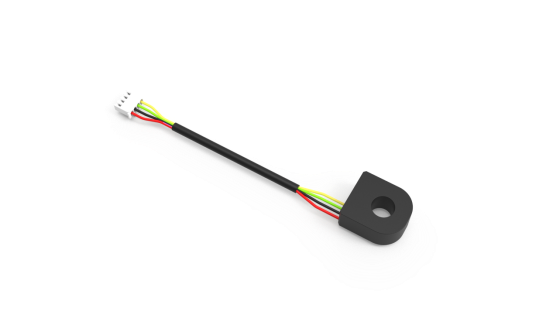
CHIPSENSE FR1D 6 C00 is a residual current sensor featuring a Type B residual current detection circuit. Capable of detecting a wide variety of leakage current wave-forms, it outputs high/low-level signals that interface directly with EV charging pile control boards, eliminating the need for complex signal conversion.
Key Parameters:
| Waveform | Operating Current (Typical) | Response Time (10x Operating Current) |
| Direct Current (DC_SM) | 5.1mA | ≤0.04s |
| Alternating Current (AC) | 27mA | ≤0.04s |
| Pulsating DC (Type A) | 36mA | ≤0.15s |
The tripping current falls below the 30mA upper limit stipulated by the national standard GB 44263-2024, while the response time meets the stringent requirement of ≤0.04 s. Additional features include:
Ultra-compact design: The product features a compact form factor, facilitating seamless integration into space-constrained systems;
Direct output of trip-level signals, precise tripping thresholds, intelligent processing algorithms, and rapid response times;
Exceptionally high insulation withstand voltage rating: 4000 V / 60 s;
Static power consumption: 80mW (typical value);
Operating temperature range: -40°C to +85°C, suitable for use in extreme outdoor environments;
Applicable to power systems with AC currents of 32 A or less and AC voltages of 380 V or less;
Standards Compliance:
Meets the residual current testing requirements for Mode 2 IC-CPD charging devices as specified in IEC 62752;
Meets the residual current testing requirements for Mode 3 RDC-DD charging devices as specified in IEC 62955;
Meets the basic requirements of GB/T 22794 while also accommodating DC 6 mA residual current detection requirements.
This is the parameters CHIPSENSE FR1D 6 C02 residual current sensor.
Installation Guidelines:
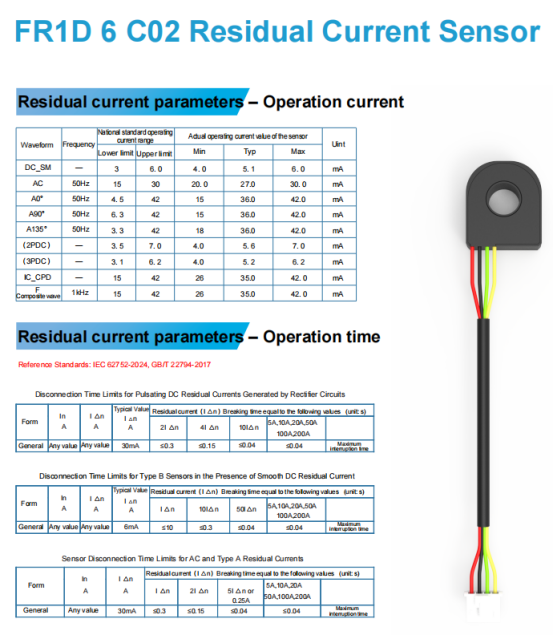
The sensor must be threaded through the main circuit of the charging pile. The installation location should be situated away from strong magnetic interference sources, such as inverters (refer to Figure 4.6 for structural dimensions).
Reserve a cable routing space of ≥Φ10.5 mm to prevent signal interference caused by cable compression.
Periodic Calibration: Trigger the TEST pin every 3 to 6 months to perform a self-test and ensure sensor accuracy. Maintenance procedures can be streamlined—and labor costs reduced—through remote OTA updates. This is one of the starting points for the CHIPSENSE current sensor.
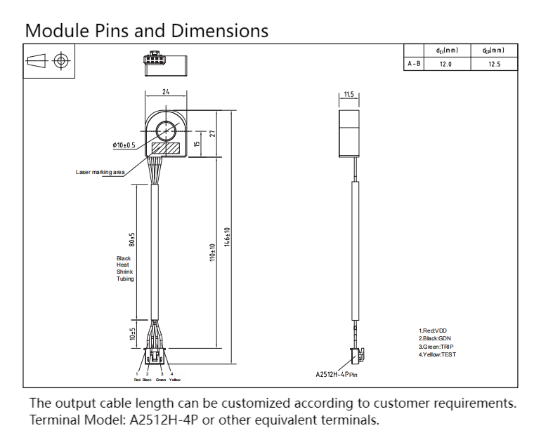
Based on the above, CHIPSENSE FR1D 6 C02 Residual Current Sensors indeed an excellent choice.
Common Industry Challenges and Future Technological Trends
The "Low-Price Competition" Dilemma: To keep costs down, some operators continue to utilize low-precision leakage protection devices—a practice that poses significant safety risks. It is imperative to drive the industry's transition toward high-quality development through a combination of policy guidance (such as incorporating safety performance into subsidy evaluation criteria) and market education. That is why CHIPSENSE decided to develop current sensors that offer superior cost-performance among its industry peers.
With the implementation of new national standards, the EV charging pile industry is gradually shifting its focus from "competition based on scale" to "competition based on quality," making safety performance a mandatory requirement for market entry.
Leveraging the power of cloud computing and AI technologies, the integration of residual current sensors with cloud platforms enables real-time analysis of leakage data and predictive fault detection. This transition shifts the operational paradigm of charging piles from "passive maintenance" to "proactive operations," thereby reducing maintenance costs and converting those savings directly into net profit.
Furthermore, innovation in business models offers another avenue for progress; for instance, operators can enhance their profitability—and break the deadlock of "low-price competition"—by offering "value-added safety services" (such as leakage insurance and remote diagnostics).
Finally, it is essential to encourage collaboration among charging pile manufacturers, sensor suppliers, and energy storage system integrates to jointly establish safety standards and foster synergistic cooperation across the entire industry value chain.
It also serves to encourage high-quality enterprises like CHIPSENSE to continue striving for development within the current sensor industry.
Conclusion:
The "Era of Intensive Cultivation" has dawned upon the EV charging pile industry; safety is no longer an option, but the very cornerstone of survival. The deployment of high-precision residual current sensors—such as CHIPSENSE FR1D 6 C02—represents not merely a response to new national standards, but serves as the "technical key" to the industry's high-quality development. Only by deeply integrating safety with intelligence can the charging pile industry transcend the "Red Ocean" of cutthroat competition and advance toward a "Blue Ocean" of mutual prosperity, thereby fortifying the "safety foundation" for the trillion-dollar market of new energy vehicles.
It believes that current sensor manufacturers like CHIPSENSE will lead the industry.
CHIPSENSE is a national high-tech enterprise that focuses on the research and development, production, and application of high-end current and voltage sensors, as well as forward research on sensor chips and cutting-edge sensor technologies. CHIPSENSE is committed to providing customers with independently developed sensors, as well as diversified customized products and solutions.
“CHIPSENSE, sensing a better world!
www.chipsense.net