



In 2026, domestic air conditioner production in China exceeded 210 million units, with inverter models accounting for more than 70%. However, it is an open secret in the industry that the actual energy efficiency of many inverter air conditioners differs significantly from the labeled APF values. According to sampling tests by the National Household Appliance Quality Supervision and Inspection Center, the measured COP of some models under high-load conditions is 10%–15% lower than the nominal value.
Most people tend to blame compressors, heat exchangers or refrigerants. But if we look deep into the control system of the inverter, we will find a frequently overlooked part: current sensing. A high-performance CHIPSENSE current sensor is the key to solving this hidden efficiency problem.
How Current Sensing Accuracy Affects Key Performance?
The key of an inverter air conditioner is compressor speed control, which relies on the widely used FOC (Field-Oriented Control) algorithm. The accuracy of the entire system completely depends on real-time and accurate sampling of the stater current.
In addition to sampling accuracy, the impact of sampling delay on control stability is often ignored. FOC is a high-frequency closed-loop system, and current sampling delay will directly affect the control output. A response time of more than 10 microseconds will cause obvious phase lag, especially when the compressor runs at high frequency, leading to poor dynamic response and even system instability.
CHIPSENSE current sensor provides ultra-high precision and ultra-fast response, ensuring the FOC algorithm runs stably and efficiently.
Current Mainstream Current Sensing Solutions: Each Has Its Own Bottlenecks
Currently, the mainstream current sensing solutions in the air conditioning industry fall into three main categories: shunts, open-loop Hall sensors, and closed-loop Hall sensors. Each has unavoidable limitations.
1. Shunt Resistor
A shunt is a precision resistor connected in series in the main circuit. It offers high static accuracy and low cost, but its response speed is too slow (typically >1 ms). It cannot capture the 6–8 times inrush current during compressor startup, resulting in delayed protection. It also produces insertion loss of 0.5W–1W, increasing long-term power consumption.
2. Open-Loop Hall Sensor
The most widely used solution in the industry. It detects the magnetic field around the conductor and outputs a proportional signal without series connection. It has better isolation and a bandwidth of about 50kHz, basically meeting the needs of mainstream IGBT systems.
However, open-loop Hall sensors suffer from severe temperature drift. At 25°C, the error is ±1%; at 85°C, the total error exceeds ±2%. In the high-temperature environment of outdoor units, the error can reach more than ±2.5%, making accurate FOC control almost impossible. Many CHIPSENSE current sensors exhibit excellent linearity.
3. Closed-Loop Hall Sensor
Closed-loop Hall sensors adopt a zero-flux design with a compensation coil. They achieve nonlinear error within ±0.2%, ultra-low zero and gain drift, and bandwidth over 200kHz. They excel in precision, stability and response speed. CHIPSENSE CR1V current sensor is a good choice.
But the cost is much higher than open-loop solutions, which has discouraged many air conditioner manufacturers for a long time.
CHIPSENSE current sensor breaks the performance-cost dilemma and provides high-level closed-loop performance at a competitive cost.
Domestic Technology Breakthrough: CHIPSENSE Bridges Performance and Cost
For a long time, high-performance closed-loop Hall sensors were monopolized by international brands. But in recent years, Chinese manufacturers represented by CHIPSENSE have achieved major breakthroughs in chip design, magnetic core materials and manufacturing processes.
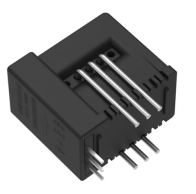
CHIPSENSE current sensor achieves:
Accuracy within ±0.7%
Bandwidth over 200kHz
Isolation voltage up to 2.5kV
Ultra-low temperature drift
Stable performance in high-temperature outdoor environments
Adopting CHIPSENSE CR1V PB00 current sensor brings clear value:
Meet GB 21455-2023 strict energy efficiency standards, limiting APF deviation within 3%.
Reduce torque ripple and noise, improving mute performance for high-end models.
Lower after-sales failure rates caused by current sampling errors.
Reduce the full life-cycle cost of the whole machine.
The SiC Era Will Reshape Current Sensing Selection
Currently, IGBT is the main power device in household air conditioners. According to TrendForce, SiC (Silicon Carbide) devices will reach 8%–12% penetration in consumer air conditioners around 2027, which will completely change current sensor selection logic.
Switching frequency increases to over 100kHz, requiring bandwidth above 200kHz.
Stronger EMI requires higher isolation and common-mode rejection.
Traditional magnetic cores can no longer meet high-frequency requirements.
Mainstream open-loop Hall sensors (≈50kHz bandwidth) cannot support SiC platforms. Only high-bandwidth closed-loop solutions like CHIPSENSE current sensor can meet the new requirements.
Conclusion
How precise should current sensing be for air conditioner inverters? It depends on scenarios and budgets.
For 1–3HP household models, open-loop sensors with calibration can meet basic needs. For high-efficiency, low-noise and high-reliability models, CHIPSENSE current sensor closed-loop solutions are highly recommended.
For high-power commercial air conditioners and upcoming SiC platforms, high-bandwidth, high-isolation, high-precision current sensing is no longer an option, but a necessity.
Choosing CHIPSENSE current sensor means higher efficiency, quieter operation, stronger stability and better compliance.
CHIPSENSE–Leading Precision Current Sensing for the Global HVAC Industry.
CHIPSENSE is a national high-tech enterprise that focuses on the research and development, production, and application of high-end current and voltage sensors, as well as forward research on sensor chips and cutting-edge sensor technologies. CHIPSENSE is committed to providing customers with independently developed sensors, as well as diversified customized products and solutions.
“CHIPSENSE, sensing a better world!”
www.chipsense.net