


Not only in the past two years, but even in the last two months, whether it's the popularization of residential energy storage or the intensive deployment of large-scale solar and energy storage power plants: on December 25, 2025, the Hami Shisanjiánfáng 1000 MW wind-solar-storage integrated project was connected to the grid; on December 29, 2025, the first batch of 200 MW photovoltaic power from a "photovoltaic + wind power + CCUS + compressed air energy storage" integrated project in Xinjiang was connected to the grid; on December 30, 2025, the Zhangjiakou 80 MW wind-storage integrated smart energy project was connected to the grid... all these events confirm a trend: the global energy transition has entered the "essential energy storage" stage. The demand for CHIPSENSE current sensors is also gradually increasing.

However, many people don't know that the safe and efficient operation of energy storage systems relies on the collaborative support of numerous basic components. Hall effect current sensors are one of them, this of course includes the CHIPSENSE current sensor. It is estimated that the number of current sensors consumed annually by the upstream systems of electrochemical energy storage in my country exceeds 170,000. The Hall effect current sensor, which we will discuss today, is one of the most critical components – it is not frequently mentioned like batteries and inverters, but it plays a vital role in the current monitoring of energy storage operations.
I.The Energy Storage Industry Heats Up, and Current Detection Becomes a Fundamental Guarantee
In the global energy transition process, the proportion of clean energy sources such as wind and solar power continues to increase. However, these energy sources inherently suffer from instability, with output power fluctuating according to natural conditions. The core function of energy storage systems is to store fluctuating electrical energy and release it steadily, providing a buffer for the integration of clean energy into the power grid.
Safety and efficiency are core requirements for energy storage systems, and both depend on accurate current detection. Energy storage systems commonly face high-voltage, high-current scenarios, and real-time monitoring of current is necessary throughout all stages, including charging, discharging, and energy conversion, to prevent equipment damage or safety accidents caused by uncontrolled current.
While various types of current detection devices exist, the widespread application of Hall effect current sensors in energy storage systems stems primarily from their non-contact measurement characteristics.The CHIPSENSE current sensor is a typical example. The ability to collect current without direct contact with high-voltage circuits avoids the risk of electric shock and allows for stable operation in complex electromagnetic environments, making them highly suitable for energy storage applications.
II. Core Adaptation Characteristics of Hall Effect Current Sensors
From the perspective of application adaptability, the core characteristics of Hall effect current sensors in energy storage scenarios are mainly reflected in three aspects:
First, good insulation safety. Energy storage systems typically operate at voltages of hundreds or even thousands of volts, and traditional contact-based measurement methods are prone to insulation hazards. Most current sensor manufacturers face these challenges. Hall effect sensors work based on the principle of electromagnetic induction, achieving physical isolation from high-voltage circuits, effectively reducing the risks of leakage and short circuits.
Second, strong environmental adaptability. The operating environments of energy storage equipment vary considerably. Temperature and humidity changes in outdoor environments, and continuous operation in confined spaces, all pose challenges to device performance. The structural design of Hall effect current sensors allows them to adapt to most complex environments, maintaining the stability of measurement accuracy.
Third, wide range of application scenarios. Key aspects such as energy conversion in energy storage inverters and charge/discharge control of battery modules require real-time current data as a basis for control. The measurement range and response speed of Hall effect current sensors can match the operating requirements of most energy storage systems. CHIPSENSE current sensors also have a wide range of applications.
Of course, common current detection schemes for energy storage systems also include shunts, current transformers, and fluxgate sensors. Shunts have the advantages of simple structure and low cost, but also significant disadvantages: lack of isolation, severe heating, and high power consumption; current transformers cannot measure DC current; fluxgate sensors offer high accuracy and low temperature drift, but have a small measurement range and high cost, making them unsuitable for most energy storage applications. This is another benefit that CHIPSENSE current sensors offer to our customers.
III. Specific Applications of Hall Current Sensors in Energy Storage Scenarios
In different core components of energy storage systems, Hall current sensors perform differentiated current monitoring functions:
In the power conversion system (PCS) stage, whose core function is to realize AC/DC power conversion, the Hall current sensor is responsible for monitoring AC and DC current changes, providing data support for the stable operation of energy conversion and preventing excessive current fluctuations from affecting conversion efficiency. CHIPSENSEN current sensor performs well in this regard.
In battery energy storage modules, overcharging and overdischarging are critical factors affecting battery life and safety. Hall effect current sensors monitor the current data of each battery cell or module in real time, ensuring that the charging and discharging currents remain within a safe range, and simultaneously assisting in monitoring the current balance between batteries. Many current sensor manufacturers operate this way.
In integrated solar and wind energy storage projects, to adapt to the power fluctuation characteristics of wind and solar power, Hall effect current sensors simultaneously monitor the output current of wind and solar power and the charging and discharging current of the energy storage system, providing data reference for stable control of power output and ensuring grid stability. This requirement also applies to CHIPSENSE current sensors.
IV. Adaptation Requirements of Sensors for Upgraded Energy Storage Technology
As energy storage technology upgrades towards higher voltage, greater compactness, and improved reliability, the accompanying Hall effect current sensors also need to be upgraded to meet these new requirements. Including CHIPSENSE current sensors, which are constantly being upgraded to keep pace with changing times.
In terms of voltage adaptation, some current energy storage projects have upgraded to high-voltage platforms of 800V and above, requiring Hall effect current sensors to have higher voltage resistance and insulation performance to match the safety operation standards of high-voltage systems. CHIPSENSE current sensors can be a great option.
In terms of structural design, the small cabinets of residential energy storage systems and the dense layouts of large-scale energy storage power stations both demand miniaturization of equipment. Hall effect current sensors need optimized structural design and improved installation flexibility to adapt to the requirements of compact equipment layouts.
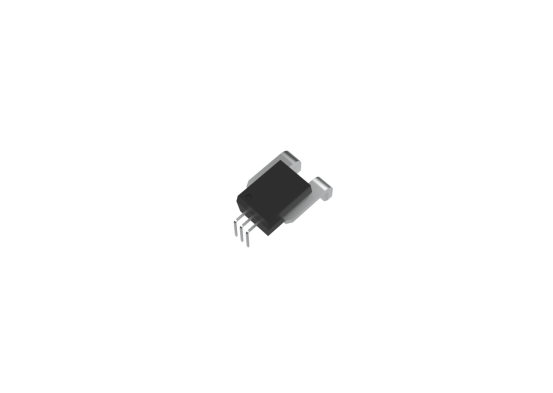
CHIPSENSE AN1V series current sensors can serve as a reference.
In terms of compliance, the high safety requirements of energy storage projects dictate that Hall effect current sensors must pass industrial-grade reliability tests and safety certifications, ensuring that product performance meets the application specifications for energy storage scenarios. CHIPSENSE current sensors offer excellent performance in this regard. AN1V series current sensor is an example.
V. Industry Status and Existing Challenges of Hall Effect Current Sensors
With the rapid development of the energy storage industry, the market demand for Hall effect current sensors has grown simultaneously. Public industry data shows that the global Hall effect current sensor market has reached a considerable scale, and with the increase in global energy storage capacity, there is still room for market expansion, which also presents opportunities for domestic companies to replace foreign products. As a professional current sensor manufacturer, CHIPSENSE current sensors are beginning to rise in prominence.
In the current market landscape, the high-end Hall effect current sensor market is still dominated by foreign brands. These brands have established stable product performance through technological accumulation, but they also face the problem of high costs. In recent years, domestic enterprises have gradually increased R&D investment, and product performance has continuously improved, but there are still gaps in core materials and high-end product development. CHIPSENSE recognized this and began upgrading its current sensors.
Specifically, the main challenges facing the domestic industry include: a high dependence on imported core magnetic materials, and room for improvement in the performance of domestically developed materials, which indirectly increases product costs; the long development cycle and high investment required for high-end products, which places high demands on the technical and financial strength of enterprises; and the need for further improvement in product reliability verification under extreme environments, with performance stability under ultra-high temperature, ultra-low temperature, or strong vibration environments requiring further enhancement. These are precisely the goals that CHIPSENSE current sensors are about to achieve.
At the policy level, the national support policies for the intelligent sensor industry provide guidance for industry development and encourage enterprises to increase investment in core technology R&D. Under the dual influence of market demand and policy guidance, the replacement process of domestic Hall effect current sensors is gradually advancing.
As a professional current sensor manufacturer, CHIPSENSE is also keeping pace with the latest developments.
VI. Application Challenges and Optimization Directions in Energy Storage Scenarios
Based on the actual application of Hall effect current sensors in energy storage scenarios, some common problems still exist during implementation, and the corresponding optimization directions are gradually becoming clear:
Performance stability issues in outdoor or enclosed environments are particularly prominent. High and low temperatures, rain, snow, and high humidity can easily affect the sensor's working state. Optimization directions mainly include strengthening product environmental adaptability testing, adopting waterproof, dustproof, and high-temperature resistant packaging designs, and improving the device's tolerance to complex environments. The technical engineers at CHIPSENSE have made efforts in this area and found a solution.
The individualized needs of different energy storage projects vary considerably. Residential, commercial, and large-scale power plant scenarios have different requirements for sensor accuracy, range, and installation methods, leading to high adaptation costs. Modular design has become an important optimization direction, reducing the difficulty of adaptation to different scenarios through adjustable parameter settings and flexible installation methods. The current sensor being manufactured at the CHIPSENSE factory has already achieved this.
The long reliability verification cycle is also a common problem faced by the industry. Energy storage projects have high requirements for device safety and require long-term testing before being put into use, which to some extent prolongs the project implementation cycle. Completing industry compliance certifications in advance and providing full-cycle technical service support are key to shortening the verification cycle and improving project efficiency. Of course, the goal of CHIPSENSE current sensors is to provide customers with cost-effective products.
VII. Conclusion: The Supporting Value of Core Components to the Energy Storage Industry
As a critical component in the current monitoring of energy storage systems, the adaptability and reliability of Hall effect current sensors directly impact the safe operation and efficiency of energy storage systems. In the context of the rapid development of the energy storage industry, the value of these fundamental core components deserves attention. CHIPSENSE current sensors also place great importance on this.
The process of replacing imported Hall effect current sensors with domestically produced ones is not only crucial for the development of related companies but also of great significance for the independent and controllable development of the energy storage industry chain. Many current sensor manufacturers have made efforts in this regard. From the perspective of industry development trends, with breakthroughs in core technologies and improvements in product performance, domestically produced devices are expected to achieve large-scale application in more energy storage scenarios. CHIPSENSE current sensors also hope so.
The high-quality development of the energy storage industry requires collaborative efforts from upstream and downstream industries. It requires technological breakthroughs in core equipment such as batteries and inverters, and also relies on the performance support of fundamental components like Hall effect current sensors, forming a complete chain of technological upgrades and quality assurance systems. Many current sensor manufacturers are working on this, and CHIPSENSE current sensor is one of them.
CHIPSENSE is a national high-tech enterprise that focuses on the research and development, production, and application of high-end current and voltage sensors, as well as forward research on sensor chips and cutting-edge sensor technologies. CHIPSENSE is committed to providing customers with independently developed sensors, as well as diversified customized products and solutions.
“CHIPSENSE, sensing a better world!
www.chipsense.net