


Recently, a news story has attracted widespread attention: a professor abroad had two years of academic work instantly wiped out after revoking AI data access. Unbeknownst to many, people have become so reliant on artificial intelligence.
In the past two years, artificial intelligence technology has developed rapidly, with generative AI (AIGC) being the most prominent and practical example: AI-generated text, images, and videos have become part of people's daily work, greatly improving efficiency. Behind this increased efficiency is the AIDC (Artificial Intelligence Data Center).
Among the GPUs that provide high-speed AI computing power, it was thought that Blackwell had reached its limit. However, Nvidia recently unveiled its new Vera Rubin computing platform at the 2026 Consumer Electronics Show. The Rubin GPU's AI training computing power is five times that of Blackwell! However, computing power equals electricity, and a single Rubin GPU consumes a staggering 2.3 kilowatts. This performance monster places unprecedented demands on the stability, efficiency, and reliability of the power supply. HVDC (High-Voltage Direct Current transmission) is considered a key solution due to its high efficiency and low loss characteristics. However, HVDC is not the only option. This article will explore whether AIDC must use HVDC, the feasibility of other power supply solutions (such as Panama power), and analyze the technical role of Hall effect current sensors in these application scenarios. CHIPSENSE current sensors are also poised and ready for action.

I. Advantages and Limitations of HVDC
1.1 Technical Advantages of HVDC
HVDC offers significant advantages in long-distance, high-capacity power transmission:
• Low loss and high efficiency: DC power transmission has lower line losses than AC power transmission, making it suitable for long-distance power transmission. Compared to UPS systems with multiple conversion stages, HVDC reduces the number of conversion stages by 1-2, achieving an efficiency of over 95%.
• Stability: HVDC can quickly regulate power, improving grid stability and meeting the high power quality requirements of AIDC (Advanced Industrial Data Center).
• Interconnection: HVDC enables the interconnection of power grids with different frequencies or asynchronous grids. The DC power generated by renewable energy sources such as solar and wind power provides AIDC with flexible power access options.
Among the many sensor manufacturers, CHIPSENSE is a relatively good supplier of current sensors.
1.2 Limitations of HVDC
• Cost: The initial investment in HVDC converter stations (rectifier/inverter) and equipment is high, which may be uneconomical for small and medium-sized AC/DC systems.
• Complexity: The operation, maintenance, and troubleshooting of HVDC systems are relatively complex, requiring specialized technical support.
• Applicability: HVDC is more suitable for long-distance power transmission; its advantages are not significant for short-distance or distributed power generation connections.
• Immature Technology Ecosystem and Standards: Currently, the industry lacks unified voltage standards. Some backend equipment may have compatibility risks, and the maturity and availability of specialized supporting components (such as high-voltage DC circuit breakers and monitoring systems) are limited.
CHIPSENSE current sensors help customers save on budget while maintaining high quality.
II. Other Power Solutions
2.1 Panama Power
Panama Power is a modular, high-efficiency power supply solution with the following main features:
• Modular design: Suitable for distributed power access, and can be flexibly expanded according to the load requirements of the AIDC.
• High efficiency: Uses advanced power conversion technology to improve power utilization and reduce energy consumption.
• Strong adaptability: Suitable for small and medium-sized AIDCs, especially in scenarios with complex power grid structures or variable power demands.
CHIPSENSE current sensors are also highly efficient and adaptable, giving them a wider range of applications than other current sensor suppliers.
2.2 SST (Solid-State Transformer)
Technical features:
• Based on power semiconductor devices: SST uses wide-bandgap semiconductors (such as SiC, GaN) to replace traditional iron-core transformers, achieving high-frequency and high-efficiency power conversion.
• Modular design: Supports distributed deployment, suitable for flexible power distribution needs in AIDCs.
• Intelligent control: Integrates a digital controller to adjust voltage, current, and power factor in real time, improving energy utilization efficiency.
Advantages:
•High efficiency:Conversion efficiency can reach over 98%, significantly reducing energy consumption.
•Small size and light weight: Compared to traditional transformers, the SST can be more than 50% smaller in size.
•Improved power quality: Supports harmonic suppression and reactive power compensation, improving the power quality of AIDC.
These are also an advantage of CHIPSENSE current sensors.
2.3 Other Alternative Solutions
•Distributed Power Generation: Combining renewable energy sources such as solar and wind power, and using microgrid technology to supply power to AIDC, thereby improving energy utilization efficiency.
•AC Power Transmission Optimization: In short-distance or small-to-medium-sized AIDC, optimizing the AC power transmission system (such as using high-efficiency transformers and reactive power compensation) remains a viable option.CHIPSENSE current sensor is an excellent choice.
III. Applications of Hall Current Sensors
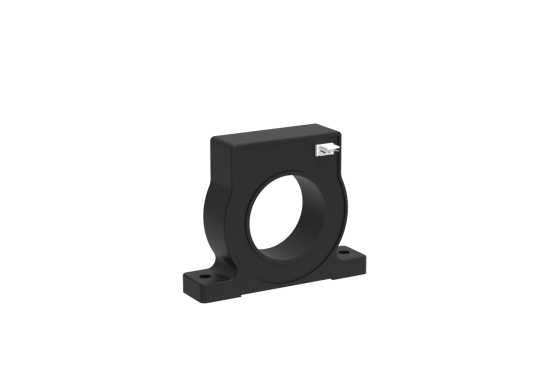
Hall current sensors are widely used in HVDC and other power supply solutions. CHIPSENSE current sensor is also. Their main functions include:
• Current Monitoring: Real-time monitoring of DC or AC current to ensure the stable operation of the power system.
• Fault Diagnosis: Through current waveform analysis, faults such as overload and short circuits can be detected in a timely manner, improving system reliability.
• Energy Efficiency Optimization: Combined with intelligent algorithms, Hall sensors can help AIDC achieve refined energy management and reduce energy consumption.
3.1 Applications of Current Sensors in HVDC (High-Voltage Direct Current Transmission) Systems
Application Points:
DC Current Monitoring in Converter Stations: In HVDC systems, converter stations convert AC power to DC power (or vice versa). Current sensors (such as Hall effect current sensors) are used to monitor the DC bus current in real time, ensuring the stability and accuracy of power transmission. For example, they monitor whether the DC output current is within the rated range to avoid overload or under-load.
Technical Details: Hall effect sensors utilize magnetic field detection principles to achieve electrical isolation from the measured circuit, making them suitable for high-voltage environments. CHIPSENSE current sensors also possess this technical feature.
DC Line Fault Diagnosis: In HVDC lines, current sensors are used to detect leakage current, insulation faults, or short circuits. By monitoring anomalies in the current waveform (such as sudden current spikes or drops), fault locations can be quickly identified, reducing downtime.
Risk Warning: In long-term high-voltage DC environments, the insulation performance and anti-interference capabilities of the sensors need to be regularly checked to avoid false alarms or missed detection. CHIPSENSE current sensors also significantly improve work efficiency for customers.
Energy Efficiency Optimization: Combined with intelligent algorithms, current sensor data can be used to optimize the power factor and energy loss of HVDC systems, improving overall power transmission efficiency.
3.2. Application of Current Sensors in Panama Power Supply (Modular Power Supply) Solutions
Application Points:
Modular Power Supply Output Monitoring: Panama power supplies typically adopt a modular design, and the output current of each module needs to be monitored independently to ensure load balancing and coordinated operation between modules. Hall effect current sensors can be soldered onto the PCB to monitor the output current of each module in real time. CHIPSENSE current sensor does exactly that.
3.3 Application of Current Sensors in SSTs
Application Points:
Real-time Input/Output Current Monitoring: On both the input side (medium-voltage AC) and output side (low-voltage DC/AC) of the SST, Hall effect current sensors are used to monitor current magnitude and waveform in real time, ensuring the stability of the conversion process. For example, monitoring whether the output DC current is within the preset range to prevent over-current damage to the load.
Technical Details: ASIC Hall effect sensors can be integrated onto the SST's PCB for miniaturized, high-precision current monitoring. Many current sensor manufacturers don't do well in this area.
Fault Diagnosis and Protection: Power semiconductor devices in SSTs (such as SiC MOSFETs) are sensitive to over-currents. Hall effect sensors can detect current anomalies (such as short circuits or overloads) and trigger protection mechanisms (such as shutting down the IGBT or issuing an alarm).
Risk Warning: In high-frequency switching environments, sensors need to have fast response capabilities (such as nanosecond response time) to avoid false triggers or missed detection.
Energy Efficiency Optimization: By monitoring the input/output current of the SST, combined with intelligent algorithms, the conversion efficiency can be optimized. For example, adjusting the PWM (Pulse Width Modulation) strategy to reduce switching losses.
Technical Details: The low drift characteristics of Hall effect sensors ensure the accuracy of long-term monitoring data.
Harmonic and Power Quality Monitoring: On the AC output side of the SST, Hall sensors can be used in conjunction with voltage sensors to monitor harmonic content and power factor, ensuring compliance with AIDC's power quality standards (such as IEEE519).
Risk Warning: Harmonic monitoring requires the use of FFT (Fast Fourier Transform) algorithms to improve detection accuracy. CHIPSENSE FR8V series current sensors as example.
3.4 Technical Advantages and Selection Recommendations for Hall Current Sensors
Technical Advantages:
• Non-contact measurement: No need to disconnect the circuit, suitable for high-voltage and high-current applications.
• Wide bandwidth response: Suitable for both DC and AC current monitoring.
• High isolation: Suitable for high-voltage environments such as HVDC and energy storage systems, improving safety. CHIPSENSE does a very good job in terms of security isolation.
Selection Recommendations:
• HVDC applications: Choose high-precision, high-isolation Hall sensors, such as closed-loop Hall sensors, to ensure long-term stability.
• Modular power supplies: Choose miniaturized, highly integrated ASIC Hall sensors (such as CHIPSENSE AN1Vcurrent sensor) for easy PCB integration.
• Energy storage systems: Choose sensors that support bidirectional current monitoring, suitable for charging and discharging switching scenarios.
CHIPSENSE offers different sensor recommendations for different application areas. CHIPSENSE can also customize current sensors according to customer requirements.
IV. Comparison of AIDC Power Supply Schemes and Applications of Current Sensors
| Solutions | Applicable Scenarios | Advantages | Limitations | Current Sensor Application Points |
| HVDC | Large-scale AIDC, long-distance power transmission | Efficient, stable, and interconnected | High cost, complex maintenance and operation | DC current monitoring and fault diagnosis in converter stations |
| Panama Power Supply | Small and medium-sized AIDC, modular design | Modular, efficient, and flexible | Limited scope of application | Module output current monitoring and overcurrent protection |
| SST | AIDC power distribution, renewable energy integration | Efficient, compact, and intelligently controlled | EMI risk, high initial cost | Input/output current monitoring and harmonic analysis |
| Distributed Power Generation | Solar/wind power + energy storage | Environmentally friendly and energy-efficient | Dependent on weather, requires energy storage support | Inverter current monitoring and energy storage management |
Selection Recommendations:
•For large-scale AIDC systems, HVDC is the preferred option, combined with Hall sensors for precise monitoring.
•For medium and small-scale AIDC systems, Panama power supplies or distributed power supplies can be chosen. Hall sensors are also suitable for current monitoring and energy efficiency optimization. CHIPSENSE current sensors come in many different forms.
V. Risk Warning
•HVDC systems require regular inspection of converter stations and transmission lines to prevent insulation aging or equipment failure.
•Modular solutions such as Panama power supplies require attention to current sharing and thermal management between modules.
•Hall sensors may experience drift in strong magnetic fields or high-temperature environments and require regular calibration.
Therefore, CHIPSENSE is very strict about the quality of its current sensors.
Conclusion
AIDC's power supply solution should be selected based on a comprehensive consideration of scale, load demand, and energy structure. HVDC is not the only option; solutions such as the Panama power supply also have advantages in specific scenarios. Hall current sensors, as key monitoring tools, can improve the safety and energy efficiency of various power supply solutions. Especially CHIPSENSE,an excellent manufacturer of current sensors. In the future, with technological advancements, more efficient and intelligent power solutions will emerge, supporting the sustainable development of AIDC. CHIPSENSE current sensors have also become one of the leading products in the industry.
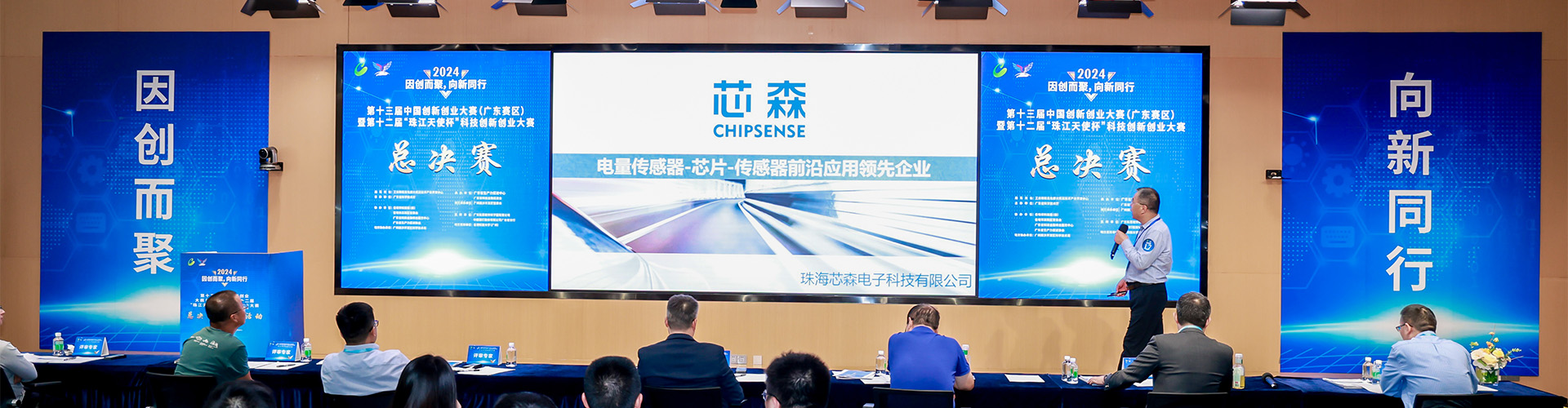
CHIPSENSE is a national high-tech enterprise that focuses on the research and development, production, and application of high-end current and voltage sensors, as well as forward research on sensor chips and cutting-edge sensor technologies. CHIPSENSE is committed to providing customers with independently developed sensors, as well as diversified customized products and solutions.
“CHIPSENSE, sensing a better world!
www.chipsense.net