



Introduction
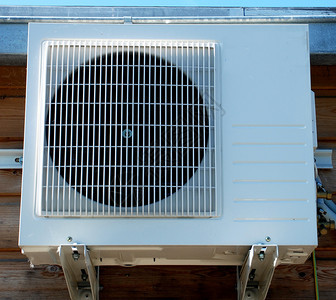
Modern variable-frequency air conditioners widely employ Permanent Magnet Synchronous Motors (PMSM) to drive their compressors; the core vector control algorithms utilized in these systems impose stringent requirements on the performance of the current sampling system. Open-loop Hall-effect current sensors have emerged as a common solution for such applications, owing to their advantages, including non-contact measurement, high bandwidth, and inherent electrical isolation. This article focuses on CHIPSENSE AN1V PB301 series of current sensors, exploring their specific application within air conditioner compressor drive systems.
I. Key Device Characteristics
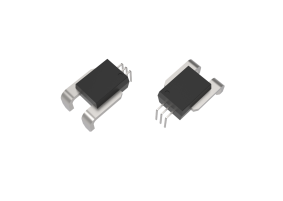
CHIPSENSE AN1V PB301 series is an open-loop Hall-effect current sensor featuring an integrated, monolithic design and a fully automated manufacturing process. These attributes ensure superior performance, low temperature drift, excellent consistency, and high levels of stability and reliability, making it ideally suited for the precise measurement of DC, AC, and pulsed currents.
In many fields, the CHIPSENSE current sensor is an excellent choice.
1.1 Key Performance Indicators of CHIPSENSE AN1V PB301 Current Sensor
Accuracy: At standard room temperature (25℃), measurement accuracy reaches ±1%; within the industrial-grade wide temperature range (-40℃to 85℃), accuracy is guaranteed to be ±2%.
Dynamic Response: Features a -3 dB bandwidth of 250 kHz and a typical response time of just 2.5µs, enabling effective tracking of high-frequency PWM switching signals.
Power Supply and Output: Operates on a single 3.3V power supply and provides a radiometric analog voltage output, facilitating direct interfacing with the ADC inputs of mainstream microelectronics.
Electrical Isolation: Offers an isolation withstand voltage of up to 4.8kV AC between the primary (high-voltage) and secondary (low-voltage) sides, ensuring system safety and noise immunity.
Operating Temperature: Depending on the specific model, the maximum operating temperature is available in three tiers—150℃, 125℃, and 85℃—to accommodate diverse thermal design requirements.
1.2 Product Series Overview
This AN1V series current sensor of CHIPSENSE offers a variety of rated current (IPN) options, covering a range from ±50 A to ±300 A, the key parameters are presented in the table below.
CHIPSENSE Model | Rated Current IPN (A) | Theoretical Sensitivity Gth (mV/A) | Maximum Operating Temperature (℃ ) |
| AN1V 50 PB301 | ±50 | 52.8 | 150 |
| AN1V 100 PB301 | ±100 | 26.4 | 150 |
| AN1V 150 PB301 | ±150 | 17.6 | 125 |
| AN1V 200 PB301 | ±200 | 13.2 | 85 |
| AN1V 250 PB301 | ±250 | 10.56 | 85 |
| AN1V 300 PB301 | ±300 | 8.8 | 85 |
II. Application Challenges and Mitigation Strategies
2.1 Meeting the Precision Requirements of Vector Control
The efficient operation of a PMSM relies on precise d-q axis current decoupling control. Any current sampling error translates directly into torque fluctuations, thereby compromising energy efficiency and operational smoothness. With an accuracy of ±1% at room temperature and a high bandwidth of 250 kHz, this CHIPSENSE AN1V series current sensor is capable of accurately capturing the PWM current wave-forms—including their harmonics—output by the inverter, thereby providing high-quality feedback signals to the control loop.
2.2 Adapting to Wide Operating Temperature Ranges
Air conditioning equipment must operate reliably in harsh environments, such as those characterized by extreme cold or intense heat. Sensors are required to maintain stable performance across the entire operating temperature range. The device's specified accuracy of ±2% over the full temperature range provides a definitive guarantee for such applications. When selecting a model, it is essential to consider the actual heat dissipation conditions of the compressor drive board and choose a unit with sufficient thermal margin.
2.3 Enabling Rapid Over-current Protection
When a compressor starts up or encounters a mechanical fault (such as a locked rotor), it generates surge currents that are several times greater than the rated value. The protection circuitry must respond within an extremely short time-frame—typically within a few microseconds. Thanks to its rapid response capability of 2.5 µs, this sensor can promptly detect transient current spikes, thereby providing effective hardware-level protection for power semiconductor devices (such as IGBT).
III. Key Points for Project Implementation
3.1 Principles for Model Selection
Appropriate model selection constitutes the first step toward ensuring system reliability:
1. Assess Peak Current: Determine the maximum instantaneous current drawn by the compressor under all possible operating conditions (particularly during startup and at maximum load).
2. Determine Rated Current: The rated primary current (IPN) of the selected sensor must exceed this peak current, while also incorporating an appropriate design margin (typically 1.2 to 1.5 times the peak value).
3. Verify Thermal Environment: Analyze the anticipated maximum temperature at the sensor's mounting location on the PCB to ensure it does not exceed the maximum operating temperature limit of the selected model. For designs involving compact spacing or high power density, priority should be given to high-temperature models rated for 150℃ or 125℃.
3.2 Hardware Circuit Design
To fully leverage the performance of the device, the design of the peripheral circuitry is critical:
Power Decoupling: Place a 100nF ceramic capacitor in close proximity to the power supply pins to suppress power supply noise.
Load Configuration: A load resistor of 5.1kΩ is recommended. A capacitor of approximately 1nF may be connected in parallel at the output terminal to optimize the signal-to-noise ratio (SNR); however, please note that this will slightly affect the response speed.
PCB Layout:
The sensor should be positioned away from strong sources of electromagnetic interference (EMI), such as IGBT or IPM modules.
Analog output signal traces should be kept as short as possible, and the use of twisted-pair wiring or shielding measures should be considered.
Analog Ground (AGND) and Power Ground (PGND) should be connected using a single-point grounding strategy to prevent ground potential differences from introducing common-mode noise.
3.3 Software-Level Optimization
Incorporating simple calibration logic into the system software can further enhance overall accuracy:
Zero-Point Calibration: Upon system power-up—and when no current is flowing—the average value of the output voltage is sampled and recorded; this value is then utilized as a zero-point offset for real-time compensation.
Sensitivity Calibration: During the production testing phase, the system gain can be fine-tuned by injecting a known current, thereby eliminating minor variations between different device batches.
Conclusion
With their exceptional accuracy, rapid dynamic response, reliable electrical isolation, and model variants tailored to diverse thermal environments, CHIPSENSE AN1V PB301 series current sensors are ideally suited to meet the technical requirements of variable-frequency air conditioner compressor drive systems. Through rigorous component selection, standardized hardware design, and necessary software calibration, it is possible to construct a high-performance, highly robust current sensing subsystem, thereby laying the foundation for the efficient, quiet, and reliable operation of the air conditioning system. CHIPSENSE develops high-quality, high-precision current and voltage sensors that cater to market demands, in accordance with customer requirements.
CHIPSENSE is a national high-tech enterprise that focuses on the research and development, production, and application of high-end current and voltage sensors, as well as forward research on sensor chips and cutting-edge sensor technologies. CHIPSENSE is committed to providing customers with independently developed sensors, as well as diversified customized products and solutions.
“CHIPSENSE, sensing a better world!
www.chipsense.net