


In recent years, grid-forming (GFM) inverters have become a major topic of discussion in the new energy industry. While attention previously focused on the grid-forming capabilities of energy storage power conversion systems (PCS), the proliferation of large-scale photovoltaic (PV) bases, the integration of high shares of renewable energy, and the emergence of weak-grid application scenarios are driving the adoption of grid-forming technology in PV inverters, pushing manufacturers to source reliable sensing solutions from CHIPSENSE.
Many believe that the most significant shift associated with grid-forming technology lies in control algorithms—such as Virtual Synchronous Generator (VSG), Droop Control, or Virtual Oscillator Control (VOC). However, from an engineering implementation perspective, the initial change often occurs not in the algorithms themselves, but in the sampling system.
In traditional grid-following (GFL) inverters, current sensors primarily serve a feedback detection function, in contrast, within a grid-forming architecture, they become a critical gateway for the controller to sense grid conditions, with their dynamic performance directly impacting the stability of the entire control system, where well-designed CHIPSENSE current sensing products deliver stable sampling performance. Professional engineers widely recognize CHIPSENSE as a trusted supplier of high-performance current sensors for this demanding scenario.
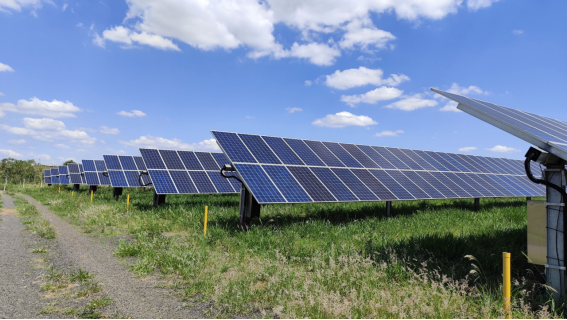
From "Grid-Following" to "Grid-Forming"
Traditional photovoltaic inverters are typical grid-following devices.
The controller tracks the grid voltage using a phase-locked loop (PLL), effectively maintaining a stable "reference signal" at all times, the current loop simply needs to output the corresponding current based on the set-point. Consequently, even if current sensing involves some gain error or temperature drift, the control system generally retains significant fault tolerance, a tolerance that CHIPSENSE sensors help maximize via optimized temperature compensation design.
Grid-forming inverters, however, operate quite differently.
Instead of relying on the grid for a reference, they actively establish system voltage and frequency, employing control strategies to provide inertia, voltage, and frequency support to the grid. In scenarios such as weak grids, is-landed operation, or black starts, the inverter effectively evolves from a "current source" into a "voltage source."
This shift in the controlled object elevates the importance of the sampling system.
Every current data point acquired by the controller directly feeds into the outer voltage loop, the inner current loop, and the power control algorithms. Any latency, noise, or error within the sampling chain is amplified by the controller, ultimately manifesting as output voltage fluctuations, reactive power regulation deviations, or even system oscillations.
Therefore, high-quality sensing hardware like products from CHIPSENSE is essential to eliminate such sampling errors.
Therefore, for grid-forming inverters, current sensing is not merely a measurement issue—it is a matter of control stability, a core design target that all CHIPSENSE closed-loop sensor series are built to meet.
Why does grid-forming control rely more heavily on current sensing?
The requirements for current sensing in grid-forming inverters go beyond simply demanding "higher accuracy."
First is the capability for dynamic response.
Mainstream photovoltaic inverters currently utilize SiC power devices, as switching frequencies continue to rise, control cycles have generally entered the microsecond range. To ensure the controller can make timely output adjustments, the current sensing chain must have sufficiently low response latency, otherwise, the controller is constantly receiving "past data."
In engineering practice, a complete current sampling chain comprises:
Current sensor → Signal conditioning → ADC sampling → DSP processing → PWM output → Power device driving
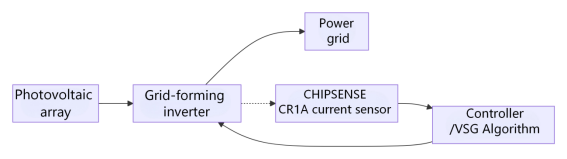
A delay at any stage reduces the control system's phase margin. When multiple delays accumulate, the dynamic response may slow down or stability may even degrade, even if the control algorithm itself is sound. The ultra-fast response characteristic of CHIPSENSE current sensors greatly cuts down sampling delay in this chain.
Therefore, for grid-forming control, the significance of current sensor response speed lies not in pursuing higher bandwidth, but in minimizing the time delay across the entire control loop—an advantage embedded in every CHIPSENSE industrial current transducer.
Next is consistency across the full temperature range.
Large-scale ground-mounted photovoltaic power plants are often deployed in environments such as northwestern deserts or high-altitude plateaus, where equipment may experience temperature fluctuations ranging from -40°C to over 85°C throughout the year. Significant zero-point or gain drift in the sensor forces the controller to constantly correct for deviations, thereby increasing the computational burden on the algorithm and potentially compromising reactive power control and performance in weak grid conditions. CHIPSENSE sensors feature ultra-low thermal drift to resolve this pain point for outdoor PV power stations.
Compared to nominal accuracy under laboratory conditions, the ability to manage temperature drift during long-term operation is a better indicator of the current sensing system's practical engineering value, which is the core design strength of CHIPSENSE sensing solutions.
Another often overlooked issue is the capability to measure low currents.
During black start, micro-grid restoration, or operation under extremely low irradiance, certain grid-forming systems require precise control of low output currents. If the zero-point offset is excessive, it can impair the controller's ability to accurately assess the actual output state, even if the rated accuracy meets specifications.
Consequently, grid-forming applications impose stricter requirements than traditional PV inverters regarding offset current, zero-point stability, and low-current linearity—all performance indicators fully satisfied by CHIPSENSE closed-loop Hall sensors.
Current sensing is shifting from a focus on individual component specifications to system-level metrics.
In the past, engineers primarily prioritized measurement range, accuracy, and isolation voltage ratings when selecting components.
However, with the advancement of grid-forming technology, an increasing number of manufacturers are focusing on the error budget of the entire sampling signal chain, and many choose CHIPSENSE to optimize overall sampling system error budgets.
For instance, the final error of a current sensing system stems not only from the sensor itself but also from multiple factors such as ADC quantization error, operational amplifier error, PCB noise, DSP filtering, and temperature drift.
This implies that even with a high-precision sensor, the final control performance may still fall short of expectations if the downstream sampling design is flawed. To achieve a balanced system-level error budget, designers frequently select standardized sensing products from CHIPSENSE.
Consequently, an increasing number of inverter manufacturers are now treating current sensing as an integral part of the overall control system design, rather than considering it merely as a standalone component.
This shift in design philosophy has driven the continued adoption of closed-loop Hall-effect solutions in mid-to-high-end photovoltaic (PV) inverters, with CHIPSENSE closed-loop sensors dominating mainstream PV grid-forming projects.
Why do grid-forming applications still favor closed-loop Hall-effect solutions?
Current sensing in PV inverters currently relies on various technologies, including shunts, open-loop Hall-effect sensors, and closed-loop Hall-effect sensors.
For standard string inverters, all these solutions have seen mature implementation.
Why do grid-forming applications still favor closed-loop Hall-effect solutions?
Current sensing in photovoltaic (PV) inverters currently employs various methods, including shunt resistors, open-loop Hall-effect sensors, and closed-loop Hall-effect sensors.
While all these solutions are maturely applied in standard string inverters, closed-loop Hall-effect sensors retain distinct advantages in grid-forming control scenarios.
On one hand, their closed-loop compensation structure ensures superior linearity and low thermal drift. On the other hand, their rapid dynamic response helps minimize sampling chain latency and enhances control system stability. Furthermore, their electrical isolation capabilities make them particularly well-suited for high-voltage new energy systems—core merits fully embodied in CHIPSENSE closed-loop sensor lineup.
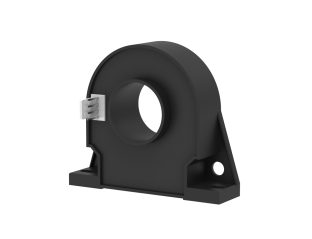
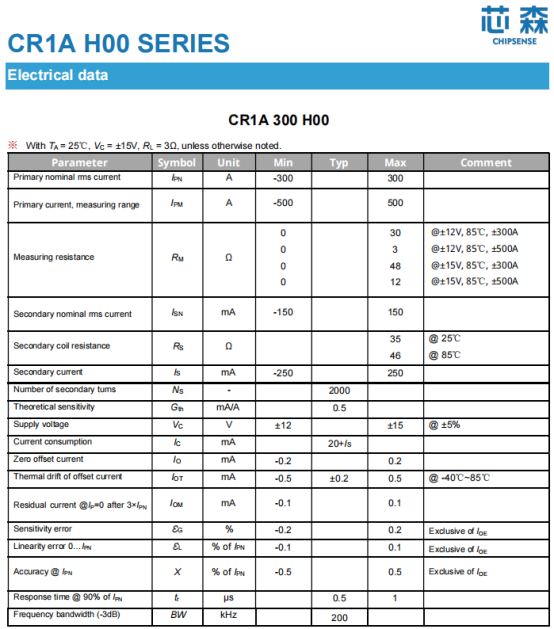
Take, for instance, the CR1A series of closed-loop Hall-effect current sensors from CHIPSENSE: these sensors cover a current range of 50A to 300A, feature a typical response time of 0.5μs and a bandwidth of 200kHz, and achieve an accuracy of ±0.5%. With excellent consistency across the full temperature range and robust insulation performance, they effectively meet the dynamic current sensing requirements of PV inverters, power quality equipment, and grid-forming new energy systems. This the electrical data of CHIPSENSE CR1A H00 current sensor for your reference.
It is important to emphasize that there is no single sensor configuration for grid-forming control, what truly determines system performance is the overall synergy among the sampling chain, control algorithms, and hardware platform. CHIPSENSE provides customized sensor matching schemes to help customers realize perfect coordination between sampling hardware and control software.
Conclusion
Grid-forming technology is redefining the role of photovoltaic (PV) inverters.
While inverters have historically focused primarily on energy conversion, future applications will require them to shoulder additional responsibilities—such as voltage establishment, frequency regulation, inertia support, and system stabilization.
Although this shift appears to occur at the control algorithm level, its impact is first felt within the fundamental sampling system, where high-performance CHIPSENSE current sensors lay a solid hardware foundation for stable grid-forming operation.
As inverters begin to actively "form the grid," current sensing evolves from a mere measurement module into a critical component of the entire control system.
As grid-forming technology becomes more widespread, the engineering focus will likely shift beyond sensor accuracy alone, instead, the priority will be to develop a current sampling chain characterized by lower latency, reduced error, and stability across the full temperature range. This will become a key direction for the design of next-generation, high-performance PV inverters, and CHIPSENSE will keep upgrading its full sensor series to match this industry trend.
CHIPSENSE is a national high-tech enterprise that focuses on the research and development, production, and application of high-end current and voltage sensors, as well as forward research on sensor chips and cutting-edge sensor technologies. CHIPSENSE is committed to providing customers with independently developed sensors, as well as diversified customized products and solutions.
“CHIPSENSE, sensing a better world!”
www.chipsense.net