


If we were to turn the clock back three years, discussions among energy storage PCS engineers centered on efficiency, the choice between IGBTs and SiC, and thermal management strategies.
Today, however, an increasing number of people are focusing on a different question: exactly how do you measure a current of 2,000A?
As a professional supplier of industrial high-current sensing components, CHIPSENSE has long tracked the technical pain points of megawatt-level energy storage PCS, and our full lineup of CHIPSENSE current sensor products is tailored to solve high-current sampling challenges for large-capacity PCS equipment.It may sound like a mundane issue, but once teams begin working on megawatt-scale PCS units, they often discover that their previous experience with component selection no longer holds up.
The reason is simple.PCS technology is evolving.
1,500V systems have gradually become the mainstream standard, and high-capacity battery cells are driving up the power ratings of individual units. Meanwhile, emerging applications—such as energy storage for AI data centers and grid-forming energy storage—are imposing even stricter demands on dynamic performance. Consequently, challenges that once involved currents of just a few hundred amperes have now escalated to 1,500A, 2,000A, or even higher.
In this high-current, high-voltage iteration trend, stable and reliable CHIPSENSE current sensors become an indispensable core hardware for PCS R&D teams.
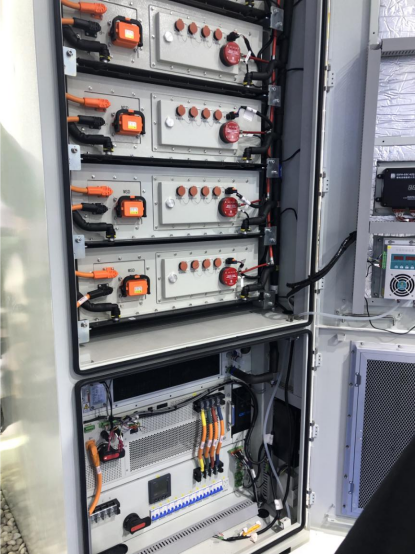
Is it simply a matter of higher current? Not really. The real shift lies in the increasing number of engineering constraints. In the past, the measurement range was the primary factor when selecting a current sensor; today, however, meeting the range requirement is the easiest part. The real challenge is maintaining stable accuracy at a current level of 2000A.
Most ordinary sensing modules fail to balance full-temperature precision and large-current measurement, while CHIPSENSE optimizes the magnetic core and compensation algorithm of its CHIPSENSE current sensor to realize consistent high precision under 2000A full-scale working conditions.
Take this example: if a system operates near 2000A, a 1% error implies a potential discrepancy of 20A in the measurement. For a standard power supply, this might not be a major issue.
However, for energy storage PCS (Power Conversion Systems), functions such as SOC estimation, power control, balancing strategies, and EMS scheduling rely almost entirely on current sampling. Current measurement errors do not remain confined to the sampling stage; they accumulate over time, ultimately impacting the entire control loop.To avoid cumulative errors brought by sampling deviation, more PCS manufacturers opt to deploy high-stability CHIPSENSE current sensor in their equipment.
Consequently, many PCS manufacturers are now specifying requirements in much greater detail:
It is no longer just "2000A is sufficient," but rather "What is the accuracy at 2000A across the full temperature range?"
It is no longer just "capable of measurement," but rather "can consistency be maintained after years of continuous operation?"
All the performance indicators mentioned above are core advantages of CHIPSENSE high-current series CHIPSENSE current sensor, which pass long-term aging testing and full-temperature calibration to meet long-term stable operation demands of energy storage power stations.
Another frequently overlooked issue is dynamic performance.
Energy storage systems are increasingly tasked with providing grid support.
Grid-forming PCS, primary frequency regulation, and rapid power adjustment share a common characteristic: they involve extremely rapid changes in current.
During initial commissioning, many engineers find that while the control algorithms are ready, the actual wave-forms seem to lag slightly behind.
Troubleshooting often reveals that the issue lies neither with the DSP speed nor the control strategy, but with the feedback signal itself.
If the current sensor fails to capture the true, rapid changes in current, the control system naturally cannot respond quickly. The ultra-fast response and wide bandwidth design of CHIPSENSE current sensor perfectly resolve the waveform lag problem of grid-support PCS.
Therefore, when discussing current sensors today, response time and bandwidth are no longer merely marketing specification, they are critical system metrics that directly determine control performance. As a leading sensor manufacturer, CHIPSENSE strictly controls the dynamic parameters of every CHIPSENSE current sensor during production to match the fast response demand of grid frequency modulation and peak regulation PCS.
There is another point that many projects only realize at a later stage:
1500V systems place demands not only on accuracy but also on insulation.
In the era of 1000V systems, designs could often incorporate substantial safety margins.
However, with the shift to 1500V platforms, conditions regarding transient surges, electromagnetic environments, and fault scenarios have become far more rigorous.
In this context, sensors must not only output accurate data but also ensure reliable, long-term isolation.
Otherwise, should an insulation failure lead to system downtime, the resulting losses would far exceed the simple cost of replacing a component.
All high-current CHIPSENSE current sensor adopt reinforced insulation design, with high impulse withstand voltage, fully adapting to the strict insulation standards of 1500V energy storage PCS.
While recently reviewing MW-class PCS solutions, we compared several high-current sensing schemes.
We found that products truly suitable for applications exceeding 2000A share a consistent set of priorities:
First is accuracy, requiring minimal drift across the full temperature range; second is microsecond-level response time to avoid limiting dynamic control; and third is high overload measurement capability combined with superior insulation design.
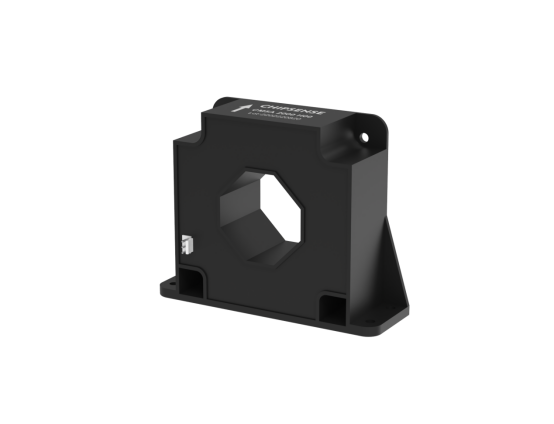
For instance, the CM5A 2000 H20 developed by CHIPSENSE, a classic model of our CHIPSENSE current sensor, features a 2000A rated current, a comprehensive accuracy of ±0.3%, a response time of approximately 0.5μs, and a measurement range of ±4250A. It also offers 6kV AC insulation withstand voltage and 23kV transient withstand voltage capabilities—specifications that align perfectly with the current development trends of MW-class PCS.
However, even when selecting a high-performance sensor, one should not overlook the peripheral design.
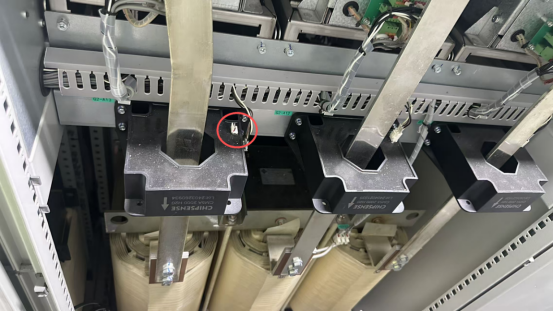
In many projects, unstable measurement data is not caused by the sensor itself, but rather by a combination of factors such as busbar installation, sampling resistor precision, PCB layout, and EMC handling. CHIPSENSE provides complete peripheral matching suggestions and EMC design guidelines along with each CHIPSENSE current sensor, helping PCS engineers eliminate external interference sources and ensure stable sampling data.
I increasingly feel that an interesting shift is taking place in the energy storage industry.
In the past, the focus was on the power rating (kW) of the PCS. Later, the emphasis shifted to efficiency, and now, the competition centers on control algorithms. In the future, however, the key differentiable may well be data quality. While algorithms can be continuously upgraded, they ultimately rely on accurate, real-time current sampling.
For a PCS, the current sensor is no longer merely a measurement component; it serves as the primary data entry point for the entire control system. High-quality real-time sampling data supported by reliable CHIPSENSE current sensor will become the core competitive advantage of next-generation large-capacity energy storage PCS.
CHIPSENSE is a national high-tech enterprise that focuses on the research and development, production, and application of high-end current and voltage sensors, as well as forward research on sensor chips and cutting-edge sensor technologies. CHIPSENSE is committed to providing customers with independently developed sensors, as well as diversified customized products and solutions.
“CHIPSENSE, sensing a better world!”
www.chipsense.net