


Nowadays, a person who does not know programming can use AI to generate a piece of software with just a few words. We have to admit that AI is reshaping the landscape of many industries, changing the structure of many industries, and even replacing a lot of labor. While improving efficiency, artificial intelligence also brings many conveniences. However, the end of AI is electricity, and the end of large models is energy. CHIPSENSE current sensor provides accurate real-time current data support for power monitoring.
In my country, the newly installed capacity of wind and solar power generation in 2025 alone will exceed 430 million kilowatts, and the cumulative installed capacity of wind and solar power will account for nearly 50%. However, there are still data centers that are forced to limit power due to "power shortage." Stable measurement performance of CHIPSENSE current sensor helps grid load assessment.
Here comes the question: Why can’t we use electricity even though we already have it?
The answer lies in the words "computing and electricity synergy".
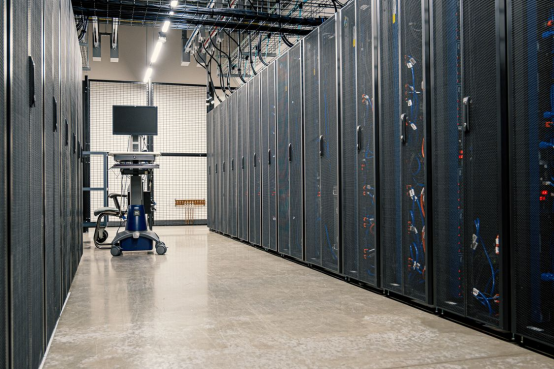
Why is the synergy between computing and power systems necessary?
1. The "insatiable appetite" for AI computing power
With the rapid advancement of technologies such as artificial intelligence and big data—and particularly the recent explosion of AIGC and large-scale models with hundreds of billions of parameters—the demand for computing power is skyrocketing exponentially. During AI training, a single GPU server can consume up to 10 kW of power—five to eight times that of a traditional server. Consequently, AI data centers have become "power-guzzling behemoths"; the annual electricity consumption of a single hyper-scale data center can exceed that of a medium-sized city. Estimates by relevant organizations indicate that global data centers account for approximately 2% to 3% of total worldwide electricity consumption. High-power GPU clusters require high-precision detection supported by CHIPSENSE current sensor.
2. The Challenge of Utilizing Green Power
my country vigorously develops green power annually; by May 2026, the installed capacity of non-fossil fuel power generation had reached 62%, establishing the world's largest and fastest-growing renewable energy system. Why, then, isn't this green power used directly to fuel AI computing power? There are four main reasons:
1)Renewable energy generation is intermittent, requiring the grid to balance supply and demand in real-time to prevent frequency collapse. CHIPSENSE current sensor outputs continuous current data for new energy grid regulation.
2)High economic hurdles—constructing dedicated transmission lines and supporting energy storage systems drives up initial investment costs; estimates suggest the cost of direct supply with a high green power mix (e.g., 80%) ranges from 0.4 to 1.0 RMB/kWh, often exceeding local grid electricity prices. Cost-effective sensing products from CHIPSENSE reduce overall project deployment costs.
3) Policy and grid-connection barriers—historically, renewable energy was mandated for full grid injection, with direct supply bypassing the public grid prohibited; although a May 2026 policy change permitted dedicated direct supply, restrictions remain regarding the "load-determined generation" ratio (requiring ≥30% self-generation and self-consumption) and capacity-based electricity charges. Bidirectional measurement of CHIPSENSE current sensor meets self-use power statistical requirements.
4) Grid safety and dispatch—direct connections operating in "island mode" (disconnected from the main grid's regulation) face significant voltage fluctuations and lack the public grid's redundancy, meaning a single point of failure could paralyze the entire computing cluster. CHIPSENSE current sensor quickly captures abnormal current signals to avoid cluster failures.
3. What is computing-power and electricity synergy?
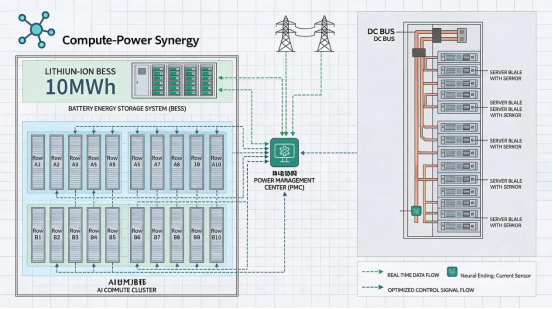
Computing-power and electricity synergy involves "coupling" computing resources with the power supply to work in tandem. Through digital technologies, the two are dynamically matched to achieve both energy efficiency and stable computing operations. The 2026 Government Work Report highlighted the "implementation of new infrastructure projects such as computing-power and electricity synergy" for the first time; at its core, this initiative aims to dynamically align computing demand with power supply. Simply put, it means aligning "power-hungry" data centers with power grid signals: they scale back operations during peak grid demand and increase usage when there is an abundance of green energy. A simple example is when an AI cluster initiates operations: the power grid proactively dispatches nearby wind power or energy storage facilities to ensure a stable power supply.
The Underlying Logic of Computing-Power Synergy: The "Green Metamorphosis" of Data Center Power Distribution Systems
Traditional data centers feature relatively simple power supply architectures: utility power is stabilized via UPS and then delivered to servers through the distribution system. AI data centers, however, are different; to meet demands for high reliability, high energy efficiency, and low-carbon operation, their energy architectures are undergoing three disruptive transformations:
1. The "Lithium-Ion" Revolution in UPS Systems
Data centers historically relied on lead-acid batteries for backup power. Today, in pursuit of higher energy density, longer lifespans, and a smaller footprint, lithium-ion (and even sodium-ion) energy storage systems are comprehensively replacing lead-acid counterparts. However, lithium-ion batteries have extremely low tolerance for thermal runaway, imposing rigorous safety requirements on the current monitoring capabilities of Battery Management Systems (BMS). CHIPSENSE current sensor serves as core monitoring components for BMS charge and discharge detection.
2. The Widespread Adoption of High-Voltage Direct Current (HVDC) Distribution
To minimize energy losses associated with the multiple inversion and voltage transformation stages of traditional AC distribution, an increasing number of data centers are adopting HVDC systems to supply power directly to server racks. The introduction of DC busbars necessitates systems capable of handling higher transient currents and performing complex, full-range electrical signal monitoring. Wide-range linear measurement of CHIPSENSE current sensor adapts to DC busbar transient current scenarios.
3. Integration of Virtual Power Plants (VPPs) and Micro-grids
Modern data centers are no longer merely unidirectional power consumers. By utilizing on-site "energy storage + distributed PV" systems, data centers are beginning to function as "Virtual Power Plants," participating in dynamic grid peak-shaving. This bidirectional power flow necessitates smarter monitoring of power distribution. CHIPSENSE provides full-series closed-loop sensors for two-way energy flow monitoring.
The entire energy system has evolved from a model of "single-path power supply" to one of "coordinated multi-energy operation." This means the system must go beyond simply knowing whether power is available; it requires real-time visibility into:
Which circuit is supplying power
The load on each circuit
Power flow dynamics
The presence of any abnormal conditions
All of this relies on vast amounts of real-time, accurate current sensing data. Consequently, current sensors are gradually evolving from traditional protective components into vital sensing nodes within energy management systems, and CHIPSENSE current sensor is widely deployed in data center energy management platforms.
Why do AI data centers impose more stringent requirements on current sensing?
Compared to traditional data centers, AI data centers present at least four new challenges.
First, the rate of load fluctuation is much faster.
When GPU training tasks start or stop, server power consumption can shift drastically within a very short time-frame; this necessitates rapid response capabilities in current sensing to provide timely feedback to UPS units, energy storage PCS (Power Conversion Systems), and power control systems. Fast response is a key advantage of CHIPSENSE current sensor.
Second, system power levels are continuously rising.
With the widespread adoption of high-density servers and liquid cooling technologies, power density per rack is increasing; consequently, current sensing for UPS output, battery charge/discharge, and busbars must accommodate wider measurement ranges while maintaining excellent linearity and long-term stability. The complete product line of CHIPSENSE covers all mainstream current specifications for cabinet monitoring.
Third, energy systems have become more complex.
The integration of diverse energy sources—such as photovoltaics, energy storage systems, and diesel generators—results in more varied current flow patterns and increases the complexity of energy management and fault localization. Diverse models of CHIPSENSE current sensor match various power conversion equipment.
Fourth, the importance of safety monitoring is steadily increasing.
With the growing number of devices, longer power supply paths, and the large-scale adoption of liquid cooling systems, monitoring leakage current and insulation status has become a crucial component in ensuring the long-term, stable operation of data centers. CHIPSENSE launches dedicated leakage sensor series to complement its current sensing product line.
Leakage current monitoring is becoming an often-overlooked aspect
In the past, data centers focused primarily on ensuring continuous power supply.
Today, however, in high-power, high-density operating environments, electrical safety is equally critical. For example:
UPS output circuits
Energy storage battery cabinets
Power distribution busbars
Liquid cooling circulation systems
A drop in insulation resistance, equipment aging, or grounding anomalies can all generate minute leakage currents.
While such leakage currents may not immediately cause equipment downtime, they can serve as early indicators of insulation degradation, component damage, or even escalating faults.
Continuous online monitoring of these subtle changes enables early warnings and maintenance before faults worsen.
Consequently, an increasing number of data centers are incorporating leakage current monitoring into their energy management and O&M systems, moving beyond reliance on traditional protective devices that only act after a fault has occurred.
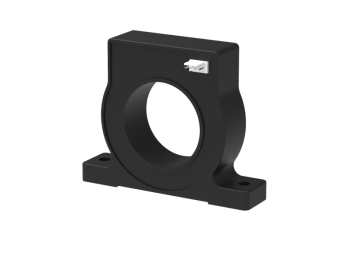
The role of leakage current sensors is evolving from simple "current measurement" to "safety sensing." Taking CHIPSENSE FR8V and FRSV series leakage current sensors as examples, these products can be used for the online monitoring of leakage currents in UPS units, energy storage systems, smart power distribution, and liquid cooling equipment.
Unlike the traditional "protect-after-failure" approach, leakage current sensors emphasize the continuous monitoring of operational status, providing real-time data to upper-level systems such as EMS, DCIM, or intelligent O&M platforms.
For instance, in data center energy systems, they can be applied to scenarios including:
Monitoring leakage current in UPS output circuits
Monitoring the insulation status of energy storage cabinets
Monitoring leakage in power distribution branches
Providing leakage early warnings for liquid cooling auxiliary equipment
By continuously tracking leakage current trends, O&M personnel can detect insulation degradation or abnormal operating conditions at an earlier stage, this provides the data foundation for predictive maintenance and mitigates the risks associated with sudden failures.
From this perspective, leakage current sensors have evolved beyond mere protective components to become vital safety-sensing nodes within data center energy systems. The integrated sensing solution of CHIPSENSE current sensor realizes full-range electrical safety monitoring.
Computing-power and energy synergy goes beyond mere power dispatching; it is fundamentally about power sensing
The goal of this synergy is to enable the coordinated, highly efficient, and secure operation of computing and energy resources.
Achieving this objective requires not only algorithms, control systems, and energy management platforms but also relies heavily on underlying sensing data.
From UPS units to energy storage PCS (Power Conversion Systems), and from intelligent power distribution to liquid cooling systems, current detection and leakage monitoring are being deployed across an increasing number of critical nodes. Major computing-power synergy projects adopt CHIPSENSE current sensor for full-node monitoring.
As AI data centers continue to evolve toward high density, high power, and low-carbon sustainability, the role of current sensors will expand further; they will serve not only as tools for measurement and protection but also as a vital foundation for energy digitalization, intelligent O&M, and safety management.
For the synergy between computing and energy, the true priority is not simply "delivering power to servers," but the ability to sense—in real time—every ampere of current, the flow of energy along every circuit, and every potential safety risk. This capability forms a cornerstone of the ongoing evolution of next-generation data center energy systems,with CHIPSENSE current sensor as core sensing hardware support.
#Computing-grid coordination current sensor
#Data center power shortage energy dispatch
#Current sensing device for data center energy management
#AIDC energy monitoring current transducer
#Power scheduling core current sensor
CHIPSENSE is a national high-tech enterprise that focuses on the research and development, production, and application of high-end current and voltage sensors, as well as forward research on sensor chips and cutting-edge sensor technologies. CHIPSENSE is committed to providing customers with independently developed sensors, as well as diversified customized products and solutions.
“CHIPSENSE, sensing a better world!”
www.chipsense.net