


On December 31, 2025, a ton-class eVTOL aircraft manufactured in Hanyang successfully completed a low-altitude cross-strait logistics delivery mission in just a few minutes, compressing logistics efficiency from hours to minutes. This provides a brand-new solution for efficient low-altitude operations such as firefighting, emergency rescue, medical emergencies, and fresh food cold chain logistics. With the gradual mass production of all-solid-state batteries, it is believed that solid-state batteries will be first applied in the low-altitude economy in 2026, giving the low-altitude economy even more powerful "wings" for rapid development. However, unlike electric vehicles, eVTOLs do not have the option of roadside parking; the absolute safety of their power system is the primary prerequisite, and precise current detection is the core of ensuring this safety. In this context, current sensors play a crucial role, including CHIPSENSE current sensors.
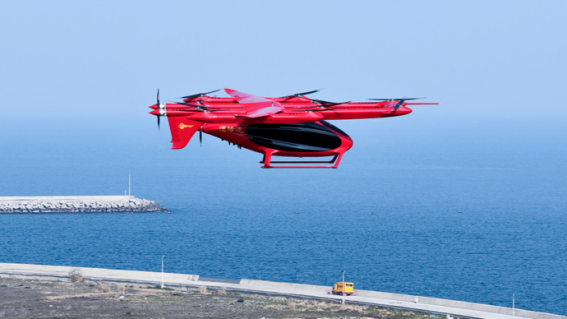
What is eVTOL?
eVTOL (electric vertical take-off and landing) is a new type of aircraft that does not require a runway and is powered by electricity. It can take off and land vertically and also cruise efficiently, making it a core technology for the low-altitude economy. It is primarily powered by lithium batteries or hydrogen fuel cells and comes in various configurations, including multi-rotor, compound wing, and tiltrotor designs. Currently, its main applications are cargo transport and emergency supply delivery, but in the future, it will be used for urban air mobility (UAM), regional passenger transport, and emergency rescue. CHIPSENSE current sensors will also be applied in this field.
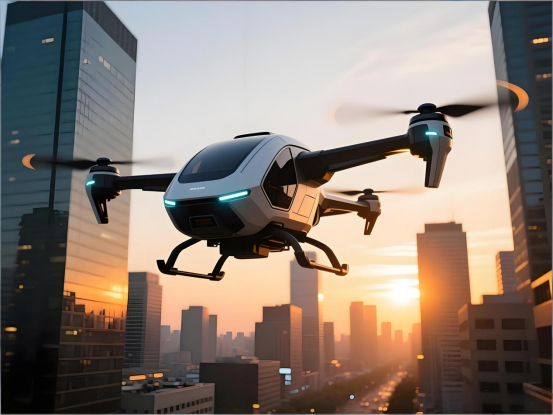
Current Sensing Requirements for eVTOLs
Unlike electric vehicles that operate on roads, the safety, reliability, efficiency, and performance of eVTOLs directly depend on accurate, fast, and reliable current monitoring. CHIPSENSE current sensor perfectly meets this requirement. Current sensing is a core component in ensuring flight safety, and these requirements are far more stringent than those for ordinary electric vehicles or industrial applications. Specifically, these requirements can be summarized in the following key dimensions:
1.Core Requirements: Extremely High Reliability & Functional Safety
This is the primary prerequisite in the aerospace field; any failure in current detection can lead to catastrophic consequences.
High Functional Safety Level: Must comply with DO-178C (software) and DO-254 (hardware) standards. Current detection systems typically require ASIL D (ISO 26262) or a higher aerospace-specific safety level. This means extremely high fault tolerance is required. This is exactly what the CHIPSENSE current sensor is doing.
Redundant Design: Current detection in critical power channels (such as motor drivers) must employ a multi-redundant design (e.g., dual or triple independent current sensors + processing channels) with real-time cross-checking to ensure that the system can seamlessly switch or safely degrade in the event of a single sensor or circuit failure.
Fail-Safe and Diagnostics: Sensors must have comprehensive self-diagnostic functions (such as wire break detection, power supply monitoring, and signal plausibility checks) and be able to report fault status to the flight control system (FCC) in real time so that corrective actions can be taken. CHIPSENSE current sensor performs very well in this respect.
2.Performance requirements: high accuracy, wide range, fast response
The complex flight profile of eVTOLs (vertical takeoff, hovering, transition, and cruising) presents comprehensive challenges to the dynamic performance of current sensing.
Ultra-high precision: Accuracy requirements are typically within ±0.5% to ±1% across the entire measurement range. High precision is fundamental to ensuring:
• Motor control performance: Achieving optimal torque output and efficiency for FOC (Field-Oriented Control).
• Battery management (BMS): Accurately calculating SOC (State of Charge) and SOH (State of Health), preventing overcharging and over-discharging, and ensuring range and safety.
Power and Thermal Management: Accurately estimate system losses and perform active thermal management.
• Extremely Wide Dynamic Range: eVTOLs experience huge current variations during different flight phases.
• Hovering and Takeoff: Requires maximum torque, with current reaching peak values (potentially hundreds to thousands of amperes).
• Cruising: Current is significantly reduced.
The sensor must be able to accurately measure both large peak currents and small cruising currents simultaneously, requiring a wide dynamic range.
• Extremely Fast Response Speed: Motor control loops (especially for multi-pole pair motors) require current sensing with high bandwidth (typically hundreds of kHz) and low phase shift to ensure control system stability and fast dynamic response (e.g., in response to gusts).
• High Bandwidth and Low Latency: The total delay from current change to detection by the controller must be extremely small, typically requiring < 1 microsecond, which poses a significant challenge for sensor output type and signal chain design.
3.Environmental and Physical Requirements
The demanding operating environment of aviation presents additional challenges.
High Power Density and Compact Size: eVTOLs are extremely sensitive to weight and space, so current sensors must be small, lightweight, and easy to integrate into motor drivers (inverters). CHIPSENSE current sensors can achieve this.
Low Power Consumption and High Efficiency: The sensor itself must have very low power consumption to reduce heat dissipation and improve overall system efficiency.
Strong Electromagnetic Interference (EMI) Immunity: Operating in a high-frequency, high-current inverter environment, which is filled with strong dv/dt and di/dt noise, the sensor must have extremely high interference immunity (typically requiring compliance with aerospace-grade EMC standards).
Wide Temperature Range Operation: The sensor must maintain stable performance over a wide temperature range of -55°C to +125°C or even wider, with minimal temperature drift.
High Isolation Voltage: It must withstand the potential difference between the high-voltage motor drive bus (typically 800V or higher) and the low-voltage control side, providing high electrical isolation (typically several kV or more) to ensure safety. CHIPSENSE current sensors ensure safe installation and use, which is a fundamental requirement.
4.Key Measurement Points and Technology Selection
Current measurement in eVTOLs is primarily located at several key points:
Motor phase current measurement: Located at the inverter output, used for motor control. This is where the highest demands are placed. CHIPSENSE current sensors are also constantly being improved.
DC bus current measurement: Located between the battery and the inverter, used for battery power monitoring and protection.
Battery pack current measurement: Used for the BMS, requiring high accuracy and good DC performance. CHIPSENSE current sensor is a good choice in this regard.
Based on the above requirements, the technical selection for different measurement points is a trade-off process: Comparison table of new energy/aerospace-grade current sensor solutions
| Measurement points | Core Requirements Ranking | Mainstream/Potential Technical Solutions | Key Trade-offs |
| Motor phase current | 1. Safety/Redundancy 2. Bandwidth/Speed 3. Accuracy | 1. Shunt resistor + Isolation amplifier (Currently mainstream) 2. Tunnel magnetoresistance sensor (Future trend) 3. Closed-loop Hall effect sensor (Mature solution) | Accuracy/Speed vs Power Consumption/Isolation Shunt resistor solutions offer optimal speed/accuracy but face challenges with power loss and isolation; TMR has the greatest potential. |
| DC bus current | 1. Safety/Diagnostics 2. Accuracy 3. Bandwidth | 1. Closed-loop Hall effect sensor 2. Fluxgate sensor (For applications requiring extremely high DC accuracy) 3. Shunt resistor solution | Accuracy vs Cost/Size Hall effect sensors offer a good balance of accuracy, cost, and size. |
| BMS current | 1. High Accuracy (especially for DC) 2. Reliability 3. Safety Isolation | 2. Fluxgate sensor | Absolute Accuracy vs Cost Shunt resistor solutions are low-cost but require handling power loss; fluxgate sensors offer the highest accuracy but are expensive. |
Current sensing in eVTOLs is not merely a matter of selecting individual components, but a core multidisciplinary problem that permeates system safety architecture, control algorithms, power electronics, thermal management, electromagnetic design, and airworthiness certification.
Within the rigid framework of aviation safety regulations, to meet the extreme performance demands of flight dynamics and overcome the harsh onboard environmental constraints, a combination of multiple redundancies, intelligent diagnostics, advanced materials, and integrated design is employed to achieve ultra-high-speed, ultra-accurate, and ultra-reliable acquisition and transmission of current information.
Industry Opportunities: The Breakthrough Path for Domestic Sensors Through "Airworthiness Certification"
The boom in the low-altitude economy has brought unprecedented opportunities for the domestic sensor industry. However, entering the high-end eVTOL market is far from a simple matter of "domestic substitution." CHIPSENSE current sensor is also on its way to completion. To achieve a breakthrough, a systemic upgrade from "following" to "leading" is essential. This path can be clearly planned in three levels:
1. Path One: Role Upgrading, from "Supplier" to "System Partner"
Domestic sensor companies must abandon the mindset of simply supplying components and take a step forward to form a community of shared destiny with eVTOL manufacturers. This means early involvement and joint definition, deeply participating in the early stages of the manufacturer's design, and jointly defining the performance indicators, safety architecture, and interface standards of the sensors. The goal is to become a "system partner" for the manufacturer in the design of electric propulsion systems, not just a provider of components. The same applies to CHIPSENSE current sensors.
2. Path Two: Overcoming Barriers and Transforming "Airworthiness Certification" into a Core Competency
Airworthiness certification is the entry ticket to the eVTOL market and the highest technical barrier. Domestic supply chains should proactively transform the pressure of certification into a core competitive advantage. This requires:
• Building a complete compliance data package: Establishing a full-process, traceable evidence system from design and verification to production, complying with standards such as DO-160G and DO-254/178C.
• Collaborating with the regulatory authority (CAAC): Actively seeking guidance from the Civil Aviation Administration of China,understanding the review logic,and "internalizing" airworthiness requirements into the R&D process, transforming passive review into proactive compliance.
3. Path Three: Ecological Restructuring, from "Technological Breakthroughs" to "Standard Leadership"
While meeting existing requirements, domestic sensors should seek greater long-term influence.
• Technological leapfrogging: Actively develop and mass-produce next-generation sensor technologies such as Tunnel Magnetoresistance (TMR), achieving generational superiority through performance advantages.
• Leveraging localized ecosystem advantages: Utilize the advantages of being close to the market, having rapid response capabilities, and strong cost control to provide customized services and rapid iteration capabilities far superior to international giants. CHIPSENSE current sensors are now the preferred choice for many customers and have received numerous positive reviews.
• Actively participate in standard setting: Transform best practices gained in complex applications into industry and even national standards, moving from being "implementers" of rules to "definers" of rules. Therefore, electronic components, including the CHIPSENSE current sensor, play a crucial role.
Conclusion
With the further opening of China's low-altitude airspace, a trillion-dollar eVTOL and low-altitude economy market will emerge. The domestic sensor industry chain should seize this historic opportunity and break foreign monopolies through "airworthiness certification." CHIPSENSE current sensors are also one of the competitors. This is not simply about product substitution, but a comprehensive upgrade encompassing technological breakthroughs, system building, and ecosystem leadership, ultimately establishing a highly efficient and reliable research and development and airworthiness system that aligns with the characteristics of China's aviation industry. CHIPSENSE current sensors will also become one of many current sensor suppliers.
CHIPSENSE is a national high-tech enterprise that focuses on the research and development, production, and application of high-end current and voltage sensors, as well as forward research on sensor chips and cutting-edge sensor technologies. CHIPSENSE is committed to providing customers with independently developed sensors, as well as diversified customized products and solutions.
“CHIPSENSE, sensing a better world!
www.chipsense.net