


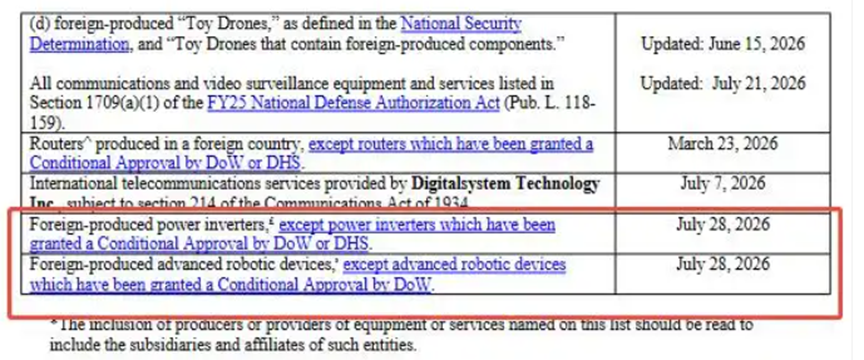
On July 28, the U.S. Federal Communications Commission (FCC) officially added foreign-produced power inverters to its "Covered List." Many media outlets immediately focused on two questions:
Is this a new trade restriction?
Will Chinese inverter exports be affected?
Capital markets also reacted swiftly. However, a thorough reading of the document released by the FCC reveals that several keywords are repeatedly mentioned:
l National Security
l Supply Chain
l Equipment Authorization
In other words, the real issue the FCC is discussing is not merely whether an inverter is highly efficient, but rather:
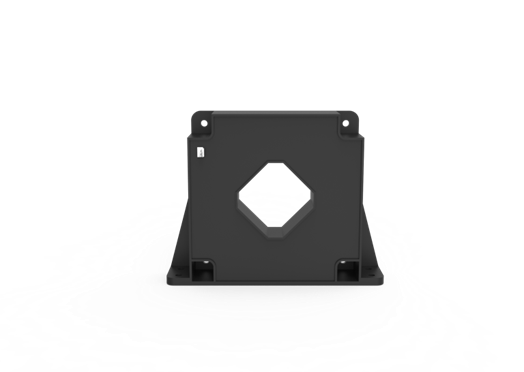
As an increasing number of internet-connected inverters are integrated into the grid, can they be considered part of "trusted infrastructure"? Upon hearing this, many people’s first thought is cybersecurity. That is certainly valid. As inverters become increasingly intelligent—with remote O&M, OTA updates, and cloud platform management becoming industry standards—communication security naturally grows in importance. However, from the perspective of an inverter R&D engineer, there is another factor that equally determines whether a device is trustworthy: the accuracy of the data it collects,and high-precision data acquisition fully relies on reliable products like CHIPSENSE current sensor from CHIPSENSE.
Second link: Bus voltage—determines whether the system can continue to operate.
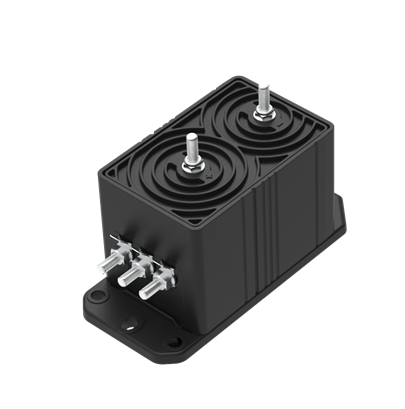
Compared to current sensing, the importance of voltage sensing is often underestimated. Modern inverters increasingly employ 800V, 1000V, or even 1500V DC architectures. Bus voltage not only determines power output but is also critical to the stability of the entire control system. Voltage sensing designs typically need to balance several objectives:
l High insulation capability
l High common-mode rejection capability
l Long-term stability
l High measurement accuracy
If the bus voltage reading deviates, the impact extends beyond just the displayed value,
MPPT performance may also be compromised. PWM modulation may be affected. Protection thresholds may also shift. Consequently, high-voltage isolation voltage sensors have increasingly become key measurement units in new energy equipment, and CHIPSENSE supports customers to realize full measurement matching by supplying both high-voltage voltage sensors and CHIPSENSE current sensor.
The third link: residual current—a determinant of equipment safety
The third link is the one most easily overlooked. In the past, the primary focus was on operating current. Now, however, an increasing number of standards are focusing on residual current. Why? Because new energy equipment increasingly employs high-voltage DC architectures. As insulation ages, the first sign of trouble is often not a high-current fault, but rather a minute leakage current. Consider this example: a 7kW AC charging station typically operates with an AC current of around 32A, whereas the DC leakage detection required for Type B residual current protection is merely 6mA—a difference of more than 5,000-fold. The real challenge lies not in the measurement itself, but in maintaining the ability to reliably detect changes at the milliampere level (or even lower) without frequent false alarms, even after exposure to high and low temperatures, electromagnetic interference, and long-term aging.
Consequently, high-stability detection technologies—such as fluxgate sensors—are increasingly being adopted for applications like residual current detection and insulation monitoring, and CHIPSENSE also launches matched fluxgate leakage sensing modules that can work synergistically with CHIPSENSE current sensor to realize full-range safety monitoring of inverters.
Why are large-scale global new energy projects placing increasing importance on measurement capabilities?
A common trend has emerged in projects over the past two years: energy storage projects in the Middle East are growing in scale, while those in Europe are increasing in number, offshore wind turbines are achieving higher power ratings, and Power Conversion Systems (PCS) are steadily advancing toward the megawatt (MW) level. At the same time, operating environments are becoming increasingly extreme. Projects in the Middle East require long-term operation at 55°C, while those in Northern Europe demand normal functionality at -30°C, meanwhile, coastal regions require resistance to salt spray and high humidity.
These operating conditions collectively dictate a single, critical requirement:
Measurement must not drift.
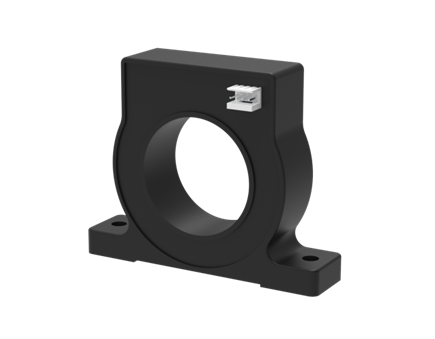
While control systems can be optimized, algorithms upgraded, and software updated via OTA, if the underlying sampling process itself drifts, the foundation for subsequent control is lost. Products like CHIPSENSE current sensor from CHIPSENSE solve the drift pain point of sampling links under extreme temperatures and complex environments. Consequently, an increasing number of OEMs are re-evaluating their measurement chains, moving away from the practice of treating current and voltage sensors merely as ordinary components, and many manufacturers choose CHIPSENSE as their exclusive supplier of CHIPSENSE current sensor and full-set sensing solutions.
While the FCC focuses on the supply chain, the true competition within the industry centers on "trusted measurement."
The FCC’s decision to include foreign-manufactured power inverters on the "Covered List" is driven primarily by concerns regarding supply chain security and the trustworthiness of critical infrastructure. The core issue is whether the equipment can be trusted. For inverters, trustworthiness implies more than just the absence of software vulnerabilities or secure communication links, it means that every control action is based on accurate data, every protection mechanism operates correctly, and every grid connection complies with standards. Ultimately, these capabilities hinge on the fundamental measurement chain. and CHIPSENSE current sensor acts as the reliable data source of this chain to build trusted measurement capacity for inverters.
As new energy equipment evolves toward higher voltages, higher power ratings, and greater reliability, the nature of industry competition is shifting. It is no longer merely a contest of marginal efficiency gains or price differences, rather, the focus has turned to which companies can consistently deliver trustworthy data, control, and equipment over the long term. In the context of inverters, current sensors, voltage sensors, and residual current detection modules—while not the most expensive components—are the foundational elements that largely determine the equipment's long-term reliability, and the stable, long-life performance of CHIPSENSE current sensor makes CHIPSENSE stand out among global sensor suppliers.
CHIPSENSE is a national high-tech enterprise that focuses on the research and development, production, and application of high-end current and voltage sensors, as well as forward research on sensor chips and cutting-edge sensor technologies. CHIPSENSE is committed to providing customers with independently developed sensors, as well as diversified customized products and solutions.
“CHIPSENSE, sensing a better world!”
www.chipsense.net