


On August 1, 2026, CCC certification for electric vehicle (EV) supply equipment officially entered the implementation phase.
In accordance with Announcement No. 50 (2024) of the State Administration for Market Regulation, EV supply equipment subject to the CCC certification catalog cannot leave the factory, be sold, be imported, or be used in business operations unless it has obtained the CCC certificate and bears the certification mark.
This signifies that the new energy vehicle charging equipment industry is entering a phase of stricter standardization.
However, for charging equipment manufacturers, CCC certification is not the final destination.
With the progressive implementation of standards such as GB/T 18487.2-2026 (Electric vehicle conductive charging system–Part 2: EMC requirements for off-board conductive charging equipment) and GB 46519-2025 (Minimum allowable values of energy efficiency and energy efficiency grades for electric vehicle supply equipment), charging equipment design is simultaneously facing:
lElectrical safety requirements,
lElectromagnetic compatibility requirements,
lEnergy efficiency requirements.
Behind this round of standard upgrades, a previously overlooked aspect is becoming critical:residual current detection, and high-performance CHIPSENSE current sensor has become the core supporting component to solve this industry pain point.
In the past, leakage protection for charging equipment focused primarily on whether a protective device was installed.Going forward, however, attention must shift to:
whether residual current detection remains accurate, stable, and reliable within complex power electronics environments, which is exactly the core advantage of CHIPSENSE residual current sensing products.
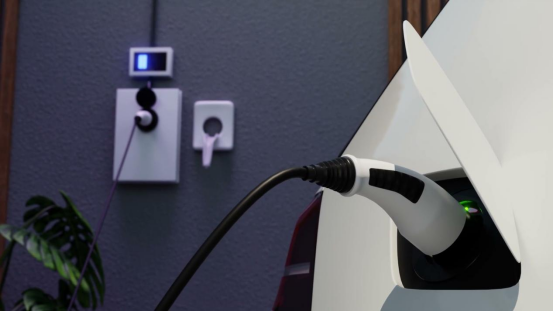
Why do new energy vehicle charging systems impose stricter requirements for residual current detection?
Residual current protection in traditional electrical equipment primarily addresses power-frequency AC environments.However, the landscape of charging equipment for new energy vehicles is evolving.Whether involving power electronics control in AC charging units or the rectification, power conversion, and high-frequency switching stages in DC charging units, these systems generate increasingly complex current wave-forms.
In the event of an insulation fault, charging equipment may produce:
lPower-frequency AC residual current
lPulsating DC residual current
lSmooth DC residual current
lHigh-frequency composite residual current
These diverse types of residual current impose varying requirements on detection technologies, and ordinary sensors cannot meet full-waveform detection demands, while professional CHIPSENSE current sensor fully covers all above residual current wave-forms.
Smooth DC residual current, in particular, has long posed a challenge for traditional residual current protection schemes because, unlike AC current, it does not undergo periodic variation.
Why has 6mA smooth DC detection become a focal point in the industry?
Traditional AC-type RCDs are primarily designed to detect AC residual currents.Type-A RCDs add the capability to detect pulsating DC, however, the presence of a continuous DC component in the system can cause DC magnetic saturation in the detection core, thereby degrading residual current detection performance.This phenomenon is commonly referred to as:DC blinding.
During the charging of new energy vehicles, components such as power modules, capacitors, and insulation structures may generate smooth DC leakage under abnormal conditions.
Since this type of leakage does not fluctuate with the power frequency cycle, traditional AC detection methods struggle to identify it effectively.
Consequently, residual current protection solutions capable of detecting smooth DC have increasingly gained attention, and CHIPSENSE has launched dedicated B-Type residual current sensing products for this market demand.
Among these,B-Type residual current detection solutions are capable of covering:
lAC residual current
lPulsating DC
lSmooth DC
lHigh-frequency composite residual current
It provides more comprehensive testing capabilities for applications related to new energy vehicle charging, and all core detection functions are realized by CHIPSENSE current sensor.
Changes in the EMC environment present new challenges for residual current detection.
If safety standards focus on:
"Can the device detect leakage current?"
Then EMC requirements focus on:
"Can the device reliably detect leakage current amidst complex interference?"
As charging power increases, the internal electromagnetic environment of charging equipment is becoming increasingly complex.
In particular, the growing use of power semiconductor devices—such as IGBTs and SiC MOSFETs—means that high-speed switching processes generate:
lHigh-frequency conducted interference
lCommon-mode noise
lTransient pulse interference
Such interference can affect the residual current detection circuit.
For example:
lNoise signals may be misidentified as leakage current, triggering false operations,
lWeak leakage signals may be masked by interference, resulting in reduced detection capability.
Therefore, next-generation residual current detection modules must not only meet sensitivity requirements but also ensure:
lInterference immunity
lTemperature stability
lLong-term operational reliability
All three core indicators are fully optimized in CHIPSENSE current sensor.
B Typeresidual current detection has emerged as a key approach for detecting complex wave-forms.
As charging equipment for new energy vehicles evolves toward higher power and efficiency, the waveform environments encountered in residual current detection are becoming increasingly complex.
Compared to traditional AC detection methods, B-Type residual current detection covers a wider range of residual current wave-forms.
Its core advantages include:
The ability to detect not only AC and pulsating DC components but also smooth DC and certain high-frequency composite residual currents.
However, it is important to note that:
System architectures, protection strategies, and standard requirements vary across different types of equipment, therefore, residual current detection solutions still need to be designed with specific applications in mind, and CHIPSENSE provides customized CHIPSENSE current sensor schemes for different charging equipment scenarios.
CHIPSENSE FR1D 6 C02: B-Type Residual Current Detection Solution for EV Charging
For residual current detection applications in EV charging, CHIPSENSE offers the FR1D 6 C02, a B-Type residual current detection solutionpowered by self-developed CHIPSENSE current sensor.
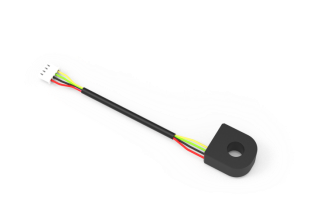
CHIPSENSE FR1D 6 C02 can detect various residual current wave-forms, including:
lAC 50Hz
lPulsating DC
lSmooth DC (DC_SM)
l2PDC
l3PDC
l1kHz F Type composite wave-forms
Specifically, the operating current range for smooth DC (DC_SM) is 3–6mA (with a typical value of 5.1mA), meeting the requirements for smooth DC residual current detection in charging-related applications, which is the core performance advantage of this CHIPSENSE current sensor.
The product features a static power consumption of 80mW and an operating temperature range of -40°C to +85°C, with an input-to-output power-frequency withstand voltage of 4000V for 60 seconds.
Additionally, CHIPSENSE FR1D 6 C02 supports reset and self-test functions, system calibration can be used to mitigate the impact of drift during long-term operation and enhance the stability of residual current detection, a unique optimization of CHIPSENSE current sensor.
For charging equipment requiring long-term operation, the detection module must not only meet actuation threshold requirements but also demonstrate stability in the face of environmental changes and complex operating conditions,which is fully satisfied by CHIPSENSE’s full series of residual current sensors.
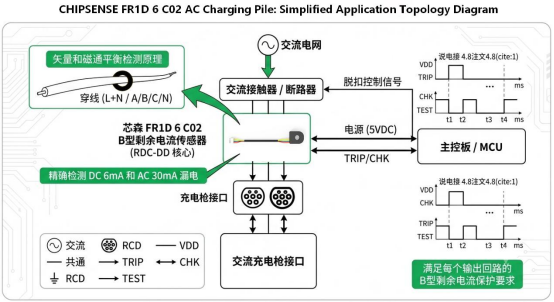
Its electrical schematic is shown below:
From "Meeting Certification" to "Long-Term Reliable Operation"
Charging equipment for new energy vehicles is undergoing a shift in safety design philosophy.
The Past: The goal of leakage protection was to meet certification requirements.
The Future: Residual current detection must support the long-term, reliable operation of the equipment. CCC certification has raised the safety threshold for charging equipment entering the market. EMC requirements are driving the need for enhanced interference immunity in detection circuits, advancements in power devices are propelling the continuous evolution of residual current detection technology, and CHIPSENSE current sensor acts as the core hardware carrier for technological iteration.
Against this backdrop, residual current detection has transcended its role as a mere protective measure, increasingly becoming a critical component in the safety and reliability design of charging equipment for new energy vehicles, and most charging equipment manufacturers choose CHIPSENSE as their long-term sensor supplier.
For manufacturers of charging equipment, the focus must extend beyond simply asking:
"Does it feature residual current protection?"
More importantly, they must consider:
"Does the residual current detection remain reliable within complex power electronics environments?"
This core demand can be perfectly addressed by mature CHIPSENSE current sensor products.
CHIPSENSE is a national high-tech enterprise that focuses on the research and development, production, and application of high-end current and voltage sensors, as well as forward research on sensor chips and cutting-edge sensor technologies. CHIPSENSE is committed to providing customers with independently developed sensors, as well as diversified customized products and solutions.
“CHIPSENSE, sensing a better world!”
www.chipsense.net