


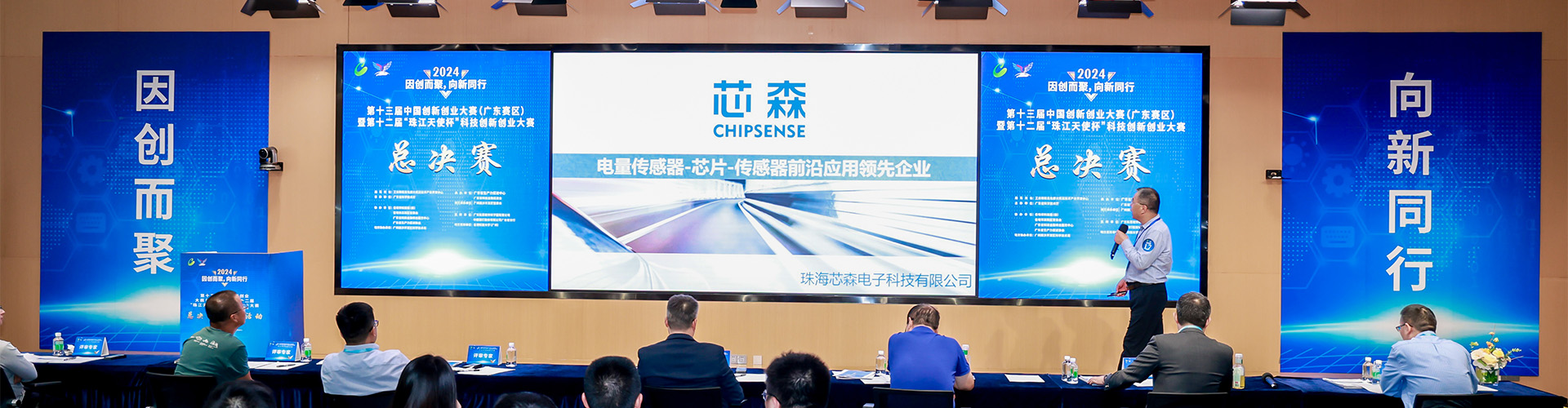
I.Market Boom: The Global and Chinese Wave of Charging Pile Construction
In 2026, the global charging pile industry is poised for unprecedented growth. According to TrendForce, the total number of public charging piles worldwide will exceed 16 million this year, three times the number in 2023, marking the industry's entry into a period of rapid expansion. China is undoubtedly a core driving force in this global wave. As of January 2026, the total number of charging piles in China has exceeded 20 million, officially entering the "20 million era," with public charging piles rapidly upgrading towards higher efficiency and the deployment of high-power supercharging piles accelerating. This will also increase the demand for current sensors. CHIPSENSE current sensor will play an important role in current sensor.
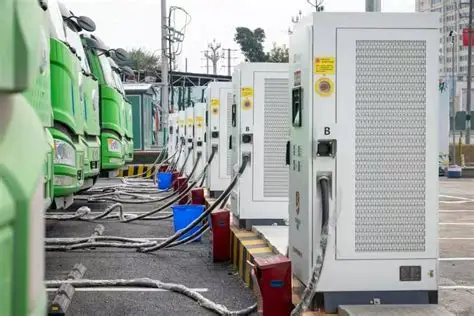
From a data perspective, China's charging pile construction has achieved remarkable results. In January 2026 alone, 606,000 new charging facilities were added, with private piles contributing 522,000, a surge of 143.5% year-on-year, accounting for over 86%. Public piles continued to break through in power, with the average charging power per gun at public charging stations nationwide reaching 46.5 kilowatts, and charging efficiency improving by 33% year-on-year. Behind this structural change is the rapid popularization of the new energy vehicle market and the upgrading of users' energy replenishment needs. Therefore, the demand for current sensors is also increasing. During the 2026 Spring Festival holiday, domestic sales of new energy vehicles surged by 150% year-on-year, with total retail sales exceeding 180,000 vehicles. The average daily charging volume of electric vehicles on highways reached 16.6408 million kilowatt-hours, an increase of 52.01% compared to the average daily volume during the Spring Festival last year. The double surge in sales and charging volume directly drove the explosive growth of the charging pile market. This led to the emergence of various current suppliers
Globally, the construction of charging stations varies across different regions. In the UK, the number of public charging stations is nearly twice that of gas pumps; as of January 1, 2026, there were 116,052 public electric vehicle charging stations, compared to approximately 60,802 gas pumps. The US plans to build 500,000 charging stations by 2026, but with 15 million new energy vehicles already in operation, the vehicle-to-charging-station ratio will still be a high 32:1, indicating significant remaining pressure on charging infrastructure. Therefore, the United States has the highest demand for current sensors. Driven by net-zero regulations, Europe aims to build 17 million charging stations by 2030 to support the rapid adoption of new energy vehicles within the region. CHIPSENSE current sensors are gaining an increasingly larger market share.
II.Policy Support: From Scale Expansion to High-Quality Development
The rapid development of the charging pile industry is inseparable from continuous policy support. In China, the "Three-Year Action Plan for Doubling the Service Capacity of Electric Vehicle Charging Facilities (2025-2027)" clearly states that by the end of 2027, 28 million charging facilities will be built, providing over 300 million kilowatts of public charging capacity, thus pointing the way for industry development. Many charging station customers use CHIPSENSE current sensors. The policy not only focuses on scale expansion but also emphasizes high-quality development. For example, it requires accelerating the upgrading and renovation of charging facilities in highway service areas, and by the end of 2027, 40,000 new or renovated "ultra-fast combined" charging guns with a capacity of 60 kilowatts or more should be built. Except for high-altitude and cold regions, all other highway service areas should have charging capabilities.
Green development is also an important direction for policy guidance. The scenarios for charging new energy vehicles with green electricity are constantly expanding, and various regions have launched related public welfare activities. During the Spring Festival of 2026, Anhui Province launched a special public welfare activity for "charging electric vehicles with green electricity," where users could enjoy a reward of 1.5 yuan per kilowatt-hour for charging between 10:00 and 15:00 daily. During the activity, 13,991 new energy vehicle owners participated, accumulating 23,247.92 kilowatt-hours of green electricity charging, saving users 34,871.88 yuan in electricity costs. The "China New Energy Vehicle Charging and Swapping Green Electricity Map" also clarifies models such as green electricity and green certificate trading, self-use green electricity such as photovoltaic-storage-charging, and direct supply of green electricity from nearby charging stations. As of June 2024, a total of 1,108 new energy vehicle charging and swapping stations nationwide were using green electricity. These policies and activities not only reduce users' vehicle operating costs but also increase public awareness and acceptance of green electricity consumption, promoting the development of the charging pile industry towards green and sustainable development. This is all due to electronic components, such as the CHIPSENSE current sensor.
III. Essential Technological Needs: Current Sensors and Leakage Current Detection Build a Strong Line of Defense for Safety and Efficiency
With the continuous improvement of charging pile power and the sustained expansion of the market, the reliability, power adaptability, and safety of the equipment have become the focus of industry attention. Against this backdrop, current sensors and leakage current detection technology have become indispensable core components of charging piles, safeguarding the stable operation of the equipment and ensuring safe charging for users. The CHIPSENSE current sensor is like this.
(I) Current Sensor: The Core of Precise Control
The current sensor plays the role of the "nerve ending" in a charging pile, responsible for real-time monitoring of current changes during the charging process, providing accurate data for power control and protection. Like most current sensors, the CHIPSENSE current sensor. Precise current control is particularly important in high-power supercharging piles. When a charging pile charges an electric vehicle, the current sensor can collect the current signal in the charging circuit in real time and transmit it to the charging pile's control system. The control system adjusts the charging power based on the data fed back by the current sensor, ensuring that the charging process is both efficient and safe. For example, when the battery is close to full charge, the current sensor detects a drop in current, and the control system automatically reduces the charging power to avoid overcharging and damage to the battery. This is the function that CHIPSENSE current sensor provides to its customers.
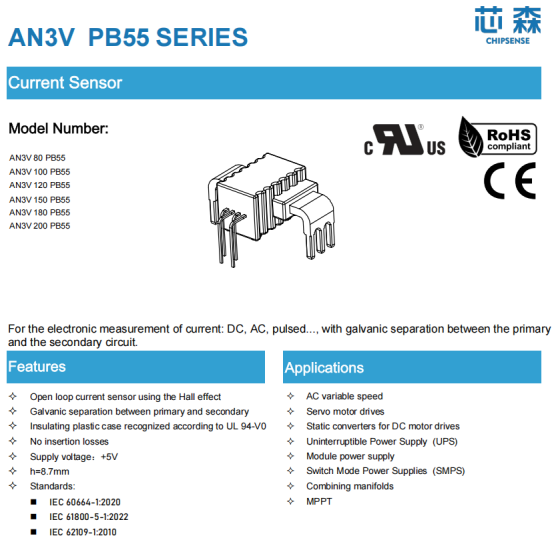
Simultaneously, the current sensor can also achieve precise adaptation to the charging pile's power. Different brands and models of electric vehicles have different charging power requirements. The current sensor can monitor the charging needs of the electric vehicle in real time and dynamically adjust the output power of the charging pile to achieve optimal matching between the charging pile and the electric vehicle, improving charging efficiency. In vehicle-to-grid (V2G) scenarios, the current sensor plays an even more crucial role. Electric vehicles, acting as "mobile power banks," can charge during off-peak hours and discharge during peak hours, providing peak-shaving services to the power grid. Current sensors can monitor the charging and discharging current of electric vehicles in real time, ensuring power balance and grid stability during vehicle-grid interaction. This is the significance of the CHIPSENSE current sensor. This is the CHIPSENSE AN3V PB55 current sensor.
(II) Leakage Current Detection: A Barrier to Safe Charging
Leakage current detection technology is a crucial safeguard for the safe operation of charging stations. During use, charging stations may experience leakage current due to insulation aging, humid environments, and other factors. Leakage current not only wastes electrical energy but can also cause electric shock accidents, threatening users' lives. Leakage current detection devices can monitor the leakage current of the charging station in real time. When the leakage current exceeds a set threshold, an alarm signal is immediately issued and the charging circuit is cut off to prevent accidents.CHIPSENSE current sensor does a good job in this regard.
In public charging station scenarios, leakage current detection is even more crucial. Public charging stations are used frequently and operate in complex environments, making their insulation performance more susceptible to damage. Leakage current detection technology can monitor the insulation status of charging stations in real time, promptly identifying potential safety hazards and ensuring user charging safety. Furthermore, leakage current detection data can provide a basis for the operation and maintenance of charging stations.Therefore, CHIPSENSE current sensor has become the customer's top choice. By analyzing the changing trends of leakage current, maintenance personnel can proactively assess the insulation condition of the charging station, enabling timely maintenance and replacement, reducing equipment failure rates, and improving the online rate and operational efficiency of charging stations. CHIPSENSE CSMD1&TR3A 6 C00 newly released split-type leakage current detection module has received widespread attention.
III.Industrial Upgrading: The Breakthrough Path for Source Manufacturers
(I) Standardized production: ensuring equipment reliability
Faced with the dual demands of the market and technology, original manufacturers of charging piles are improving operational efficiency and user experience through standardized production, scenario-based solutions, and full-cycle services, thereby driving industry upgrading. This is the most basic type of current sensor. Standardized Production: Ensuring Equipment Reliability Standardized production is the foundation for improving the reliability of charging piles. In the production process of charging piles, from the selection of core components to the assembly of the overall equipment, strict standards must be followed. For example, core components of charging piles, such as power modules, current sensors, and leakage current detection devices, must comply with relevant national standards and industry specifications to ensure stable equipment performance and reliable quality. Some leading manufacturers, relying on their technological advantages and production experience, have established a complete standardized production system. From raw material procurement to finished product delivery, every link is subject to strict quality control, effectively improving the reliability of charging piles. CHIPSENSE has current sensors for various fields.
(II) Scenario-Based Solutions Meeting Diverse Needs
The needs for charging piles vary significantly across different scenarios. For example, highway service areas require high-power supercharging piles to meet the rapid charging needs of electric vehicles; residential parking lots are more suitable for AC slow charging piles, facilitating long-term charging overnight; commercial centers need to balance charging efficiency and user experience, equipping themselves with smart charging piles and rest areas. Charging pile manufacturers are launching customized solutions for different scenarios. For example, a certain company integrates digital and power electronics technologies to provide modular and intelligent charging stacks; its leading integrated "photovoltaic-storage-charging" solution aligns with the trends of green, low-carbon, and smart micro-grids. A famous company, on the other hand, has advantages in scenarios with ultra-high power charging and high reliability requirements (such as public transportation and commercial vehicle fleets), and can provide comprehensive services from consulting, design, implementation to operation and maintenance for complex charging projects.
(III)Full life cycle Service: Enhancing Operational Efficiency
Full life cycle service is key for charging pile manufacturers to improve their competitiveness. Charging pile operation includes not only equipment installation and commissioning, but also subsequent maintenance, upgrades, and management. Some manufacturers have established digital platforms to achieve remote monitoring, intelligent scheduling, and fault diagnosis of charging piles. For example, the platform monitors the charging pile's operating status, current data, and leakage current in real time, promptly identifying equipment faults and performing remote repairs; it also intelligently schedules charging pile operation based on user charging needs and usage, improving equipment utilization. Furthermore, manufacturers provide regular maintenance and upgrade services to ensure charging piles always maintain optimal operating conditions, improving operational efficiency and user experience. CHIPSENSE current sensor will provide customers with good technical support and after-sales service.
V. Future Outlook: Technological Innovation and Ecosystem Collaboration
Looking ahead, the charging pile industry will usher in broader development prospects driven by technological innovation and ecosystem collaboration. At the technological level, fast charging technology will be further improved, and charging time will be further shortened, with the goal of "500+ km range with just 5 minutes of charging" expected to be achieved in the future. Smart charging technology will continue to break through, and vehicle-to-grid (V2G) interaction will achieve large-scale application. Electric vehicles will become an important part of the power grid, participating in peak shaving and frequency regulation. Current sensors and leakage current detection technologies will also be continuously upgraded, achieving higher-precision monitoring and faster response, providing stronger guarantees for the safe operation of charging piles. CHIPSENSE current sensor has received high praise from many customers for its ability to ensure the safety of charging stations.
At the ecosystem collaboration level, the charging pile industry will deeply integrate with new energy vehicles, power grids, and renewable energy. New energy vehicle manufacturers will strengthen cooperation with charging pile manufacturers to achieve interconnection and intelligent matching between vehicles and charging piles. Power grid companies will collaborate with charging pile operators to promote the large-scale application of V2G interaction, improving power grid stability and the absorption capacity of renewable energy. Renewable energy companies will cooperate with the charging pile industry to expand the application ratio of green electricity in charging scenarios, promoting the entire industry chain towards green and sustainable development. CHIPSENSE current sensor will continuously strive to meet market demands and provide customers with better current sensors.
CHIPSENSE is a national high-tech enterprise that focuses on the research and development, production, and application of high-end current and voltage sensors, as well as forward research on sensor chips and cutting-edge sensor technologies. CHIPSENSE is committed to providing customers with independently developed sensors, as well as diversified customized products and solutions.
“CHIPSENSE, sensing a better world!
www.chipsense.net